

Why Upgrading Your Harley Bluetooth Stereo Is Worth Every Penny
Choosing the right harley bluetooth stereo can feel overwhelming — dozens of options, confusing compatibility charts, and the fear of cutting into factory wiring you can't undo.
Here's a quick answer to help you find the right system fast:
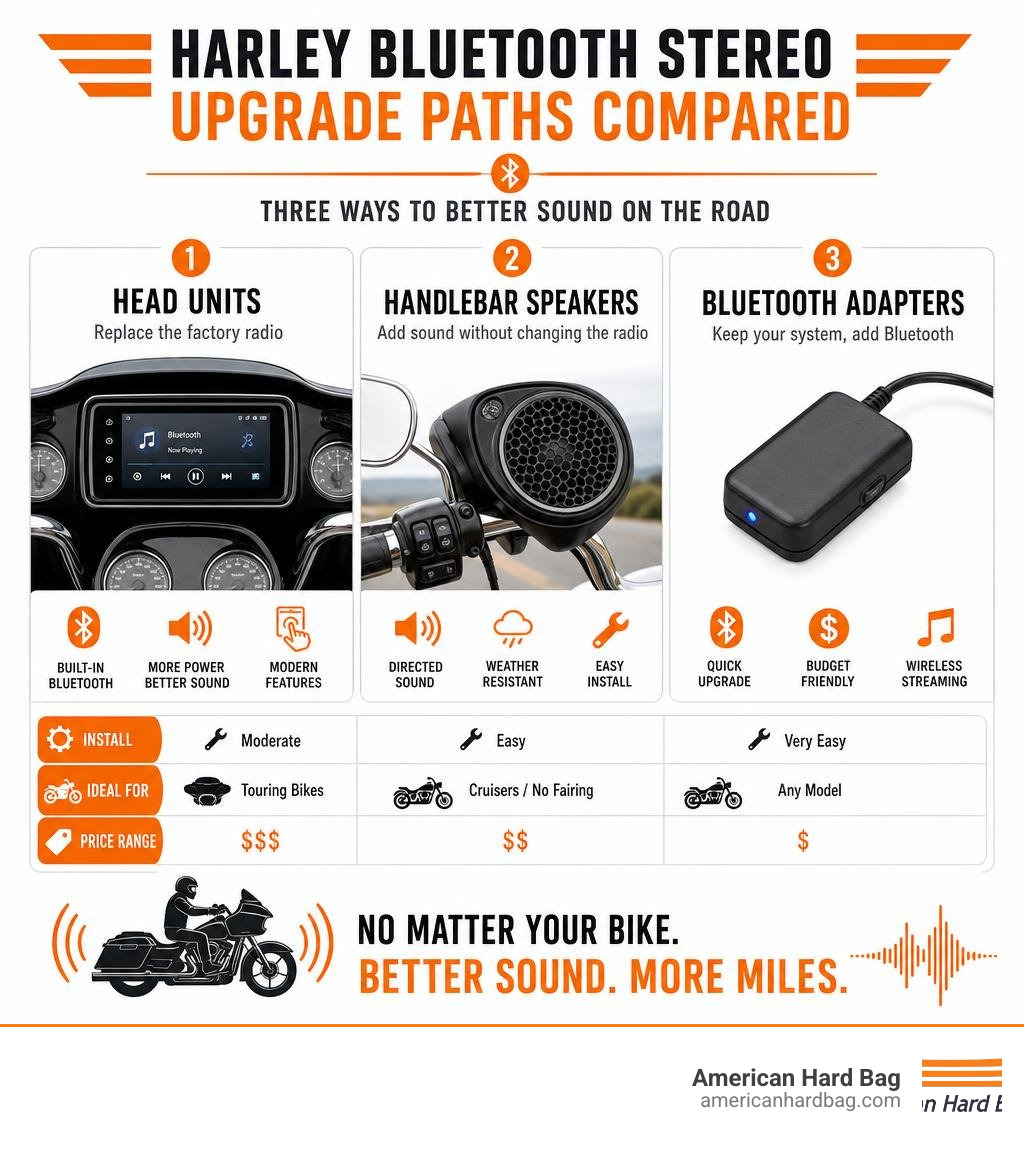
| Your Harley | Best Stereo Type | Top Pick |
|---|---|---|
| 1998-2013 Touring (Street/Road/Electra Glide) | Plug-and-play head unit | Aquatic AV MP5 or Rockford Fosgate PMX-HD9813 |
| 2014+ Touring (Street/Road Glide, Electra Glide) | Plug-and-play touchscreen unit | Soundstream V2 or Rockford Fosgate PMX-HD14 |
| Cruiser without fairing (Road King, Softail, Sportster) | Handlebar-mounted speaker system | Boom! Audio Cruiser Kit or Carpuride W702H |
| Any model, budget upgrade | Bluetooth add-on adapter | Hogtunes Wireless Music Connector |
A few things to know upfront:
- Stock Harley audio systems are almost always the weakest link — underpowered and unable to cut through wind noise at highway speeds.
- Plug-and-play kits exist for most popular Touring models, so you usually don't need to cut any factory wiring.
- Fairing type matters — the 1998-2013 Batwing and Sharknose fairings require different head units than the post-2014 Rushmore platform.
- Prices range from around $150 for a Bluetooth adapter to $1,000+ for a full premium system.
At American Hard Bag, we're a US-based manufacturer of premium motorcycle accessories with deep hands-on experience helping riders build better audio setups around their harley bluetooth stereo upgrades. We've put this comparison together to cut through the noise — so you can spend less time researching and more time riding.
Choosing the Ultimate Harley Bluetooth Stereo for Your Ride
When you are roaring down the highway at 70 mph, your motorcycle's audio system is in a brutal street fight against wind resistance, exhaust rumble, and tire noise. A standard car radio or a cheap speaker setup simply won't cut it. To get that clean, chest-thumping sound, you need a source unit engineered from the ground up for the open road.
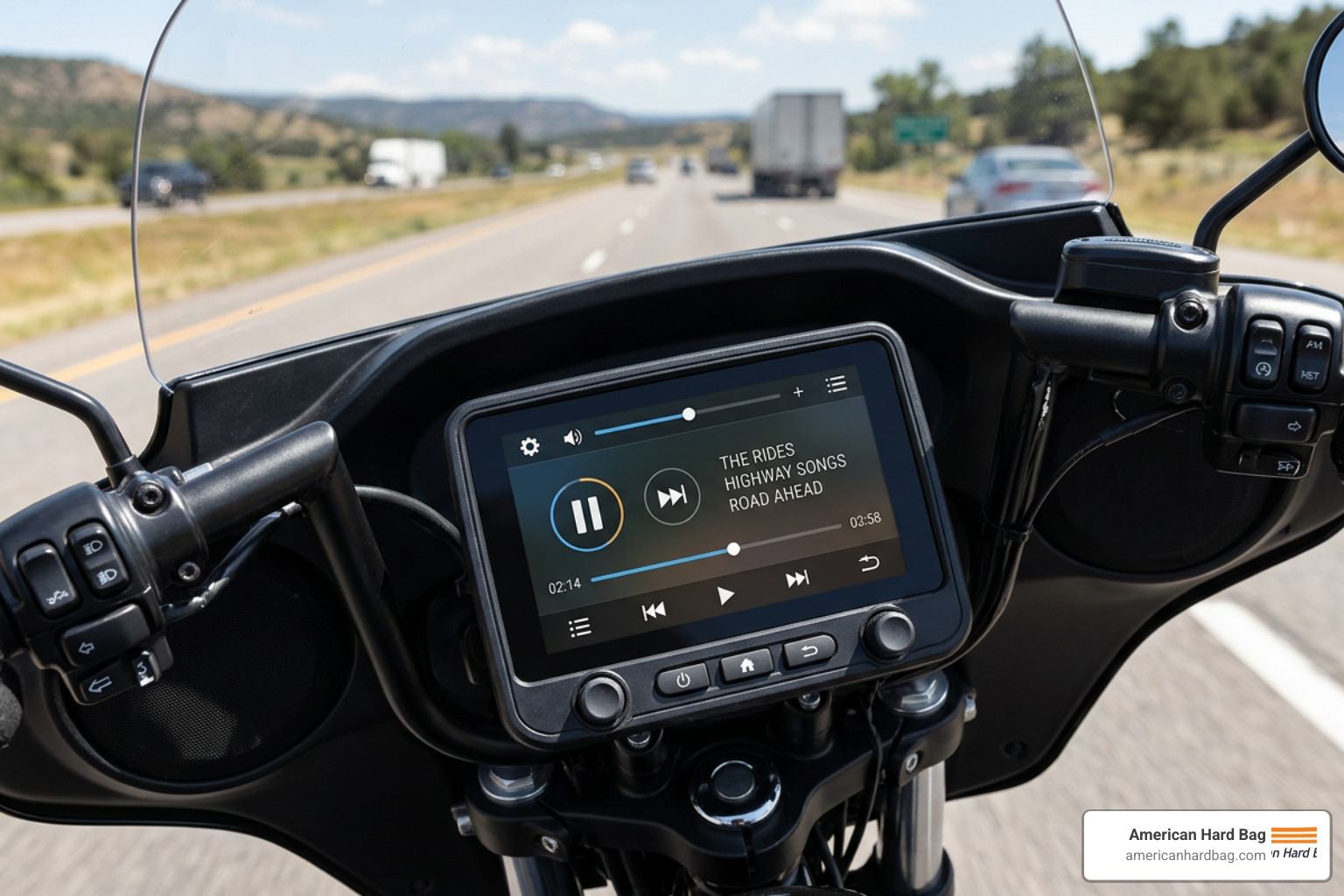
Upgrading your ride starts with choosing an audio source that can handle the environment. Whether you are looking for a complete dash overhaul or a clean way to stream music to a non-fairing cruiser, understanding your options is the first step toward audio heaven.
Key Features to Look For in a Harley Bluetooth Stereo
To ensure your investment survives the elements and performs on the road, keep these critical specifications in mind:
- Ingress Protection (IP) Ratings: Motorcycle stereos must withstand heavy rain, dust, and bike washes. Look for a minimum rating of IP55 (water-resistant) or, ideally, IPX6 (withstands high-pressure water jets).
- Screen Brightness (Nits): If you are opting for a touchscreen, screen glare from direct sunlight can make it completely unreadable. Look for displays rated at 1000 nits of brightness to ensure visibility on a bright summer afternoon.
- Amplifier Power and Topology: Standard head units often output a meager 15 to 25 watts RMS per channel, which distorts easily at high volume. Premium head units feature high-output Class A/B or Class D internal amplifiers. Class D amplifiers are highly efficient, run cooler, and draw less current from your Harley's charging system.
- Pre-Amp Output Voltage: If you plan to add external amplifiers, look for a head unit with high-voltage (4V or 5V) RCA pre-outs. This sends a clean, strong signal to your amplifier, preventing distortion and background hiss.
To dive deeper into how these components work together, check out The Ultimate Guide to Upgrading Your Harley-Davidson's Audio System.
Wireless Smartphone Integration and CarPlay
The days of mounting your phone to your handlebars and squinting at a tiny screen are over. Modern harley bluetooth stereo systems feature wireless Apple CarPlay and Android Auto. This allows you to run GPS navigation (like Waze or Google Maps), stream music playlists, and manage calls directly from your dash.
Dual Bluetooth is another game-changing feature. It allows your head unit to maintain a wireless connection to your phone for data and navigation while simultaneously broadcasting the audio feed to your Bluetooth-enabled helmet headset (like a Sena or Cardo).
For riders keeping their factory Harley infotainment screens, the official Wireless Headset Interface Module (WHIM) allows wireless headset integration. However, be aware of a common factory limitation: third-party (non-Harley) Bluetooth headsets are often restricted to mono sound when connected to the WHIM. To get full stereo sound and seamless handlebar control integration, aftermarket head units like the Soundstream V2 offer a much more open and high-performing alternative.
Comparing System Types: Plug-and-Play Head Units vs. Handlebar Speakers
The type of Harley you ride dictates the audio path you should take. If you ride a Glide with a front fairing, a plug-and-play head unit is the cleanest, most powerful solution. If you ride a Road King, Softail, or Sportster, a handlebar-mounted speaker system is your ticket to high-velocity tunes.
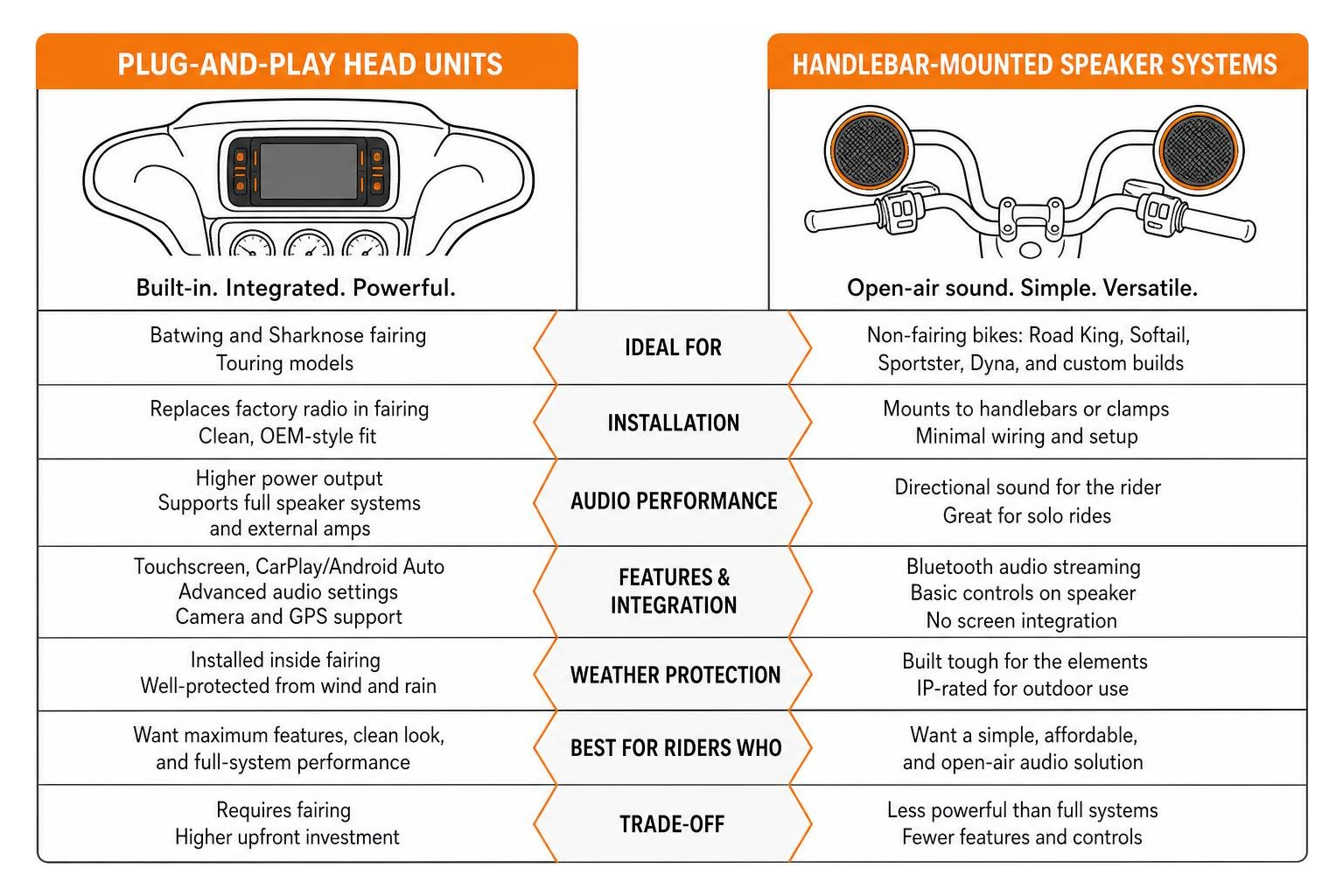
To help you weigh your options, read The Top 3 Audio Upgrades Every Harley Owner Should Consider.
Upgrading Your Legacy Ride: Harley Bluetooth Stereo Options for 1998-2013 Models
For the classic 1998-2013 Touring models (Street Glide, Road Glide, Electra Glide), the stock Harmon Kardon radio is incredibly outdated. Fortunately, the aftermarket has created brilliant plug-and-play replacements that slide right into the factory fairing.
Two standout options define this category:
- The Aquatic AV MP5 Stereo: This unit is a legendary choice for legacy baggers. It features a patented, detachable faceplate that conceals a dry, hidden storage compartment deep enough to hold and charge your smartphone (via an internal 2A USB port). It is built with a ZAM-coated stainless steel chassis to prevent rusting and boasts an IP55 water-resistance rating. Its built-in 288-watt Class A/B amplifier is stable down to 2 Ohms, allowing it to power up to 8 speakers or subwoofers simultaneously.
- The Rockford Fosgate PMX-HD9813: This is a direct replacement digital media receiver featuring a 3-inch, ultra-bright color TFT display. It is IPX6 rated to withstand powerful water jets and features a built-in voltage gauge with a low-voltage warning. It outputs a clean 25W x 4 RMS @ 4 Ohms and integrates directly with your factory handlebar thumb controls without requiring any extra modules.
Note for CVO/Screamin' Eagle Owners: If your 1998-2013 CVO came with a factory-amplified system (like Hogtunes or Boom! Audio), you will need to bypass or replace the factory amplifier to make these aftermarket head units work.
For a complete breakdown of how older Harley systems differ from modern ones, read Understanding Harley-Davidson Audio: From Factory Systems to Custom Setups.
Modern Solutions for 2014+ Touring Motorcycles
In 2014, Harley-Davidson introduced the Rushmore platform, which completely redesigned the inner fairings of Street Glides and Road Glides. Upgrading these modern touring machines requires highly specialized touchscreen infotainment systems.
The Soundstream V2 is the premier aftermarket head unit for 2014+ Harley-Davidson Touring models. It features an impressive 8.3-inch capacitive touchscreen with a blazing-bright 1000-nit backlight.
Beyond wireless Apple CarPlay and Android Auto, the Soundstream V2 features Rally Mode, a music-sharing broadcast feature that allows you to stream your playlist wirelessly to an unlimited number of nearby riders with compatible systems. It also integrates seamlessly with the iDataLink Maestro RR or RR2 module, allowing you to display up to 10 real-time digital vehicle gauges (like oil pressure and engine temperature) directly on your stereo screen.
To learn more about integrating aftermarket electronics with your Rushmore platform, see our guide on Factory Harley Radio Integration Secrets for 2014.
Installation and Integration: Getting the Best Sound on the Road
Upgrading your motorcycle's audio system is a highly rewarding DIY project, but it requires patience and the right parts. Unlike cars, motorcycles are subject to constant engine vibrations, bumps, and weather exposure, meaning loose connections will quickly ruin your day.
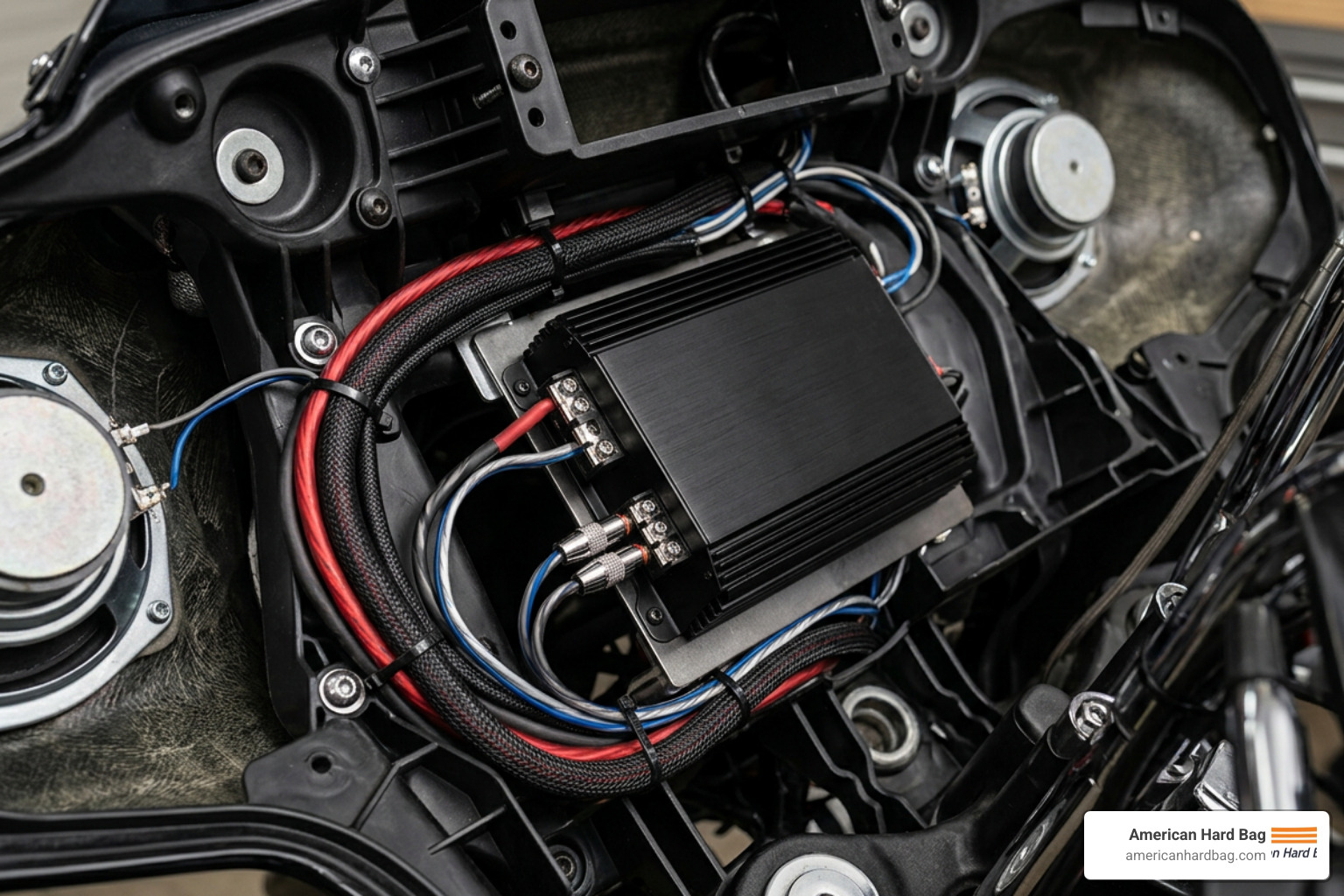
Before turning a single wrench, we highly recommend reading our guide on DIY vs Professional Installation: What You Need to Know About Upgrading Your Harley's Audio.
Retaining Handlebar Controls and Factory Integration
One of the biggest concerns riders have when upgrading their harley bluetooth stereo is losing their factory handlebar thumb controls. Keeping your hands on the grips is a critical safety factor while riding.
Fortunately, premium aftermarket head units are designed to retain these controls. While some units (like the Rockford PMX-HD9813) have built-in control translation, others require a specialized integration module. To simplify the process and avoid cutting into your factory wiring harness, we engineered the AHB T-Harley Radio Interface Harness for Amplifiers. This plug-and-play harness ensures seamless communication between your new head unit, handlebar controls, and aftermarket amplifiers.
Optimizing Sound Quality and Power
To get the absolute best sound quality on the open road, you must pair your new Bluetooth head unit with high-efficiency speakers and a powerful amplifier.
- Choose Class D Amplifiers: Because your Harley’s charging system has limited output, a Class D amplifier is essential. They deliver massive power (often 100W+ RMS per channel) while drawing minimal current, keeping your battery healthy.
- Match Impedance (Ohms): Ensure your speakers match the stable impedance of your amplifier. Running a 2-Ohm speaker on an amplifier only rated for 4 Ohms will cause the amplifier to overheat and fail.
- Utilize a Digital Signal Processor (DSP): A DSP is the secret weapon of high-end motorcycle audio. It allows you to tune your system's frequency response to overcome the acoustic challenges of an open-air environment.
For a detailed look at selecting the perfect power source for your speakers, check out our guide on How to Choose the Right Amplifier for Your Harley's Sound System.
Frequently Asked Questions About Harley Audio Upgrades
Can I add Bluetooth to my stock Harley radio without replacing it?
Yes! If you love your stock radio but want wireless music streaming, you can use a Bluetooth-to-RCA or Bluetooth-to-Auxiliary adapter. A popular option for 1999-2013 models is the Hogtunes Bluetooth Wireless Music Connector, which plugs directly into your factory harness or front AUX port.
If you are expanding your factory system with external amplifiers, you can use our Harley Plug & Play Speaker to RCA Kit to pull a clean audio signal from your stock radio directly to your new amp or Bluetooth receiver.
How do I protect my motorcycle's stereo system from the elements?
The open road is unforgiving. To protect your investment:
- Always choose marine-grade or motorcycle-specific components with solid IP ratings (IP55 or higher).
- Keep seals clean: If your head unit features a removable faceplate (like the Aquatic AV MP5), ensure the rubber gasket is free of dirt and debris to maintain its water-resistant seal.
- Avoid direct high-pressure water: When washing your bike, never spray a high-pressure hose directly at your radio screen or speaker grilles.
What is the price range for a quality Harley stereo upgrade?
The cost of upgrading your Harley's audio system depends entirely on your goals:
- Budget ($150 - $300): Simple Bluetooth adapters or basic handlebar-mounted speaker pods.
- Mid-Range ($400 - $700): High-quality plug-and-play head units (like Aquatic AV or Rockford PMX series) that replace the factory radio.
- Premium ($1,000+): Full touchscreen infotainment systems (like the Soundstream V2) paired with multi-channel Class D amplifiers, high-performance lid speakers, and professional tuning accessories.
To map out your upgrade path and budget, consult our comprehensive Ultimate Harley Audio Parts Guide.
Conclusion
Upgrading to a high-performance harley bluetooth stereo completely transforms your riding experience. There is nothing quite like hitting the open road with crystal-clear, high-power sound cutting through the wind. Whether you choose a rugged, plug-and-play head unit for your classic bagger or a state-of-the-art touchscreen receiver with wireless CarPlay for your modern touring machine, the right system is out there waiting for you.
At American Hard Bag, we are dedicated to helping riders achieve audio perfection. We design and manufacture American-engineered, plug-and-play audio upgrades specifically tailored for Harley-Davidson Touring bikes. If you are ready to stop squinting at old screens and start feeling your music, check out The Ultimate Guide to Upgrading Your Harley-Davidson's Audio System and let us help you build the audio system of your dreams!