

Why a Solid 4U Amp Rack Makes Mobile Audio Easier
A 4U amp rack is a protective case that holds up to four rack units of standard 19-inch audio gear. For a motorcycle audio upgrade, start by measuring your amplifier or DSP, then confirm the rack has enough usable depth, strong mounting rails, and removable lids for wiring access. A typical 4U case provides about 7 inches of vertical rack space, making it a practical size for an amplifier, signal processor, power distribution, or a combination of smaller components.
A durable rack does more than keep gear organized. It helps protect expensive electronics from vibration, bumps, moisture exposure, and rough handling. Look for features such as front and rear mounting rails, reinforced corners, recessed latches, sturdy handles, rubber feet, and enough depth for connectors and cable bends.
For example, a professional 4U rack may offer 16.5 inches between its rails and nearly 20 inches to the rear lid. That extra room matters when your system uses larger amps, thick power cable, RCA leads, or service disconnects. The 19-inch rack standard has been the backbone of professional audio and touring equipment for decades, ensuring that gear from different manufacturers fits the same mounting rails.
American Hard Bag builds premium hard bags and motorcycle accessories for riders who need durable gear on the road. We bring that same rider-first focus to helping you understand how to choose and configure a 4U amp rack for a cleaner, more reliable audio setup.
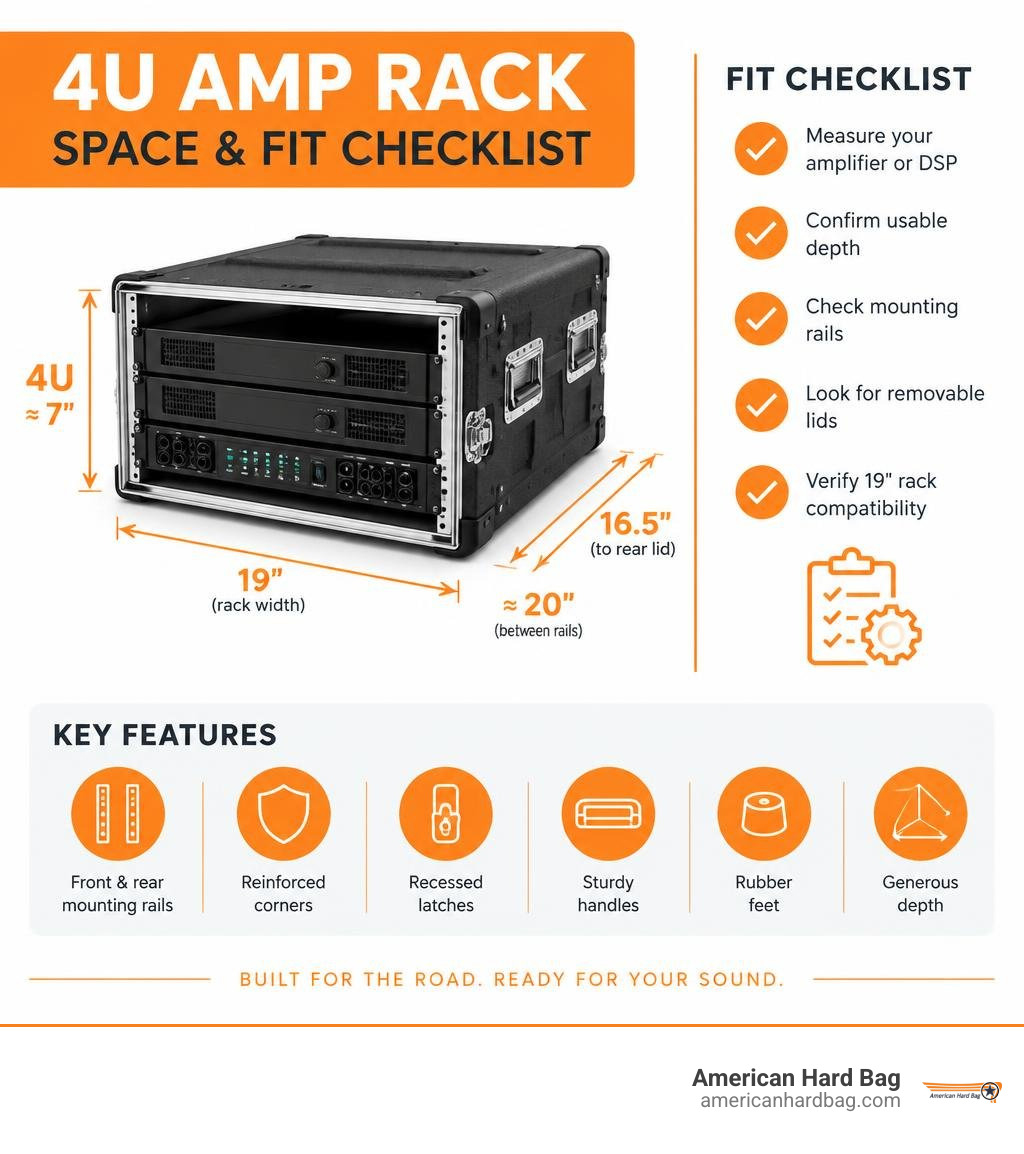
Key Specifications and Features of a Professional 4U Amp Rack
When you invest in high-end sound gear, you cannot simply toss your gear into the back of a truck or a saddlebag unprotected. A professional-grade 4-space rack is built to take abuse so your gear does not have to. Built around standard 19-inch rackmount hardware, these enclosures strike the ideal balance between internal capacity and manageable exterior dimensions.

In terms of weight, a pro-tier 4U flight case typically weighs around 27 to 29 lbs unpopulated, with a packaged shipping weight near 32 lbs. This heft comes from thick structural walls, heavy-duty hardware, and reinforced structural extrusions designed to withstand drops, shifting loads, and road vibrations. High-end models feature heavy-duty black anodized and powder-coated steel hardware, spring-loaded recessed carry handles that sit flush to prevent snagging, and rugged rubber feet that prevent unwanted sliding while absorbing baseline road shocks. Dual removable front and rear lids secured by recessed twist latches give you 360-degree service access whenever you need to reconfigure inputs or check heat dissipation.
Understanding Interior Dimensions of Your 4U Amp Rack
Rack dimensions can be deceptive if you only look at external case measurements. For audio gear, the interior depth and clearance dictate what will actually fit without pinching your cables:
- Vertical Clearance: 4U translates to exactly 7.0 inches of vertical space (1.75 inches per standard "U").
- Horizontal Width: Standard 19-inch mounting width between outer rail edges, fitting all standard chassis faceplates.
- Rail-to-Rail Depth: A typical standard pro amp rack delivers 16.5 inches from the front mounting rail to the rear mounting rail.
- Total Usable Depth: With the rear lid latched in place, total usable interior depth extends to approximately 19.75 inches.
This extra depth is crucial. Large power amplifiers and pro processors often have chassis depths of 12 to 14 inches. The remaining 3 to 5 inches behind the rear rail provide the clearance needed for heavy-gauge power terminals, banana plugs, and line-level interconnects.
Hardware Durability and ATA Flight Protection
Road readiness demands construction that meets or exceeds ATA (Air Transport Association) standards. Professional cases feature 3/8-inch or 1/2-inch multi-ply plywood covered with impact-resistant laminates, secured with tongue-and-groove aluminum extrusions that seal out dust and moisture.
Heavy-duty steel ball corners are riveted into every corner. These corners absorb the brunt of accidental drops and allow matching cases to stack securely without sliding around during transport. When your sound gear is riding over uneven highways, that shock isolation protects internal circuit boards and solder joints from fatigue and micro-fractures.
How to Configure and Wire Audio Gear in a 4U Case
Building a clean rack requires a clear plan before turning a single screw. Proper weight distribution and signal segregation keep hum out of your signal path and ensure your equipment runs cool under heavy loads.
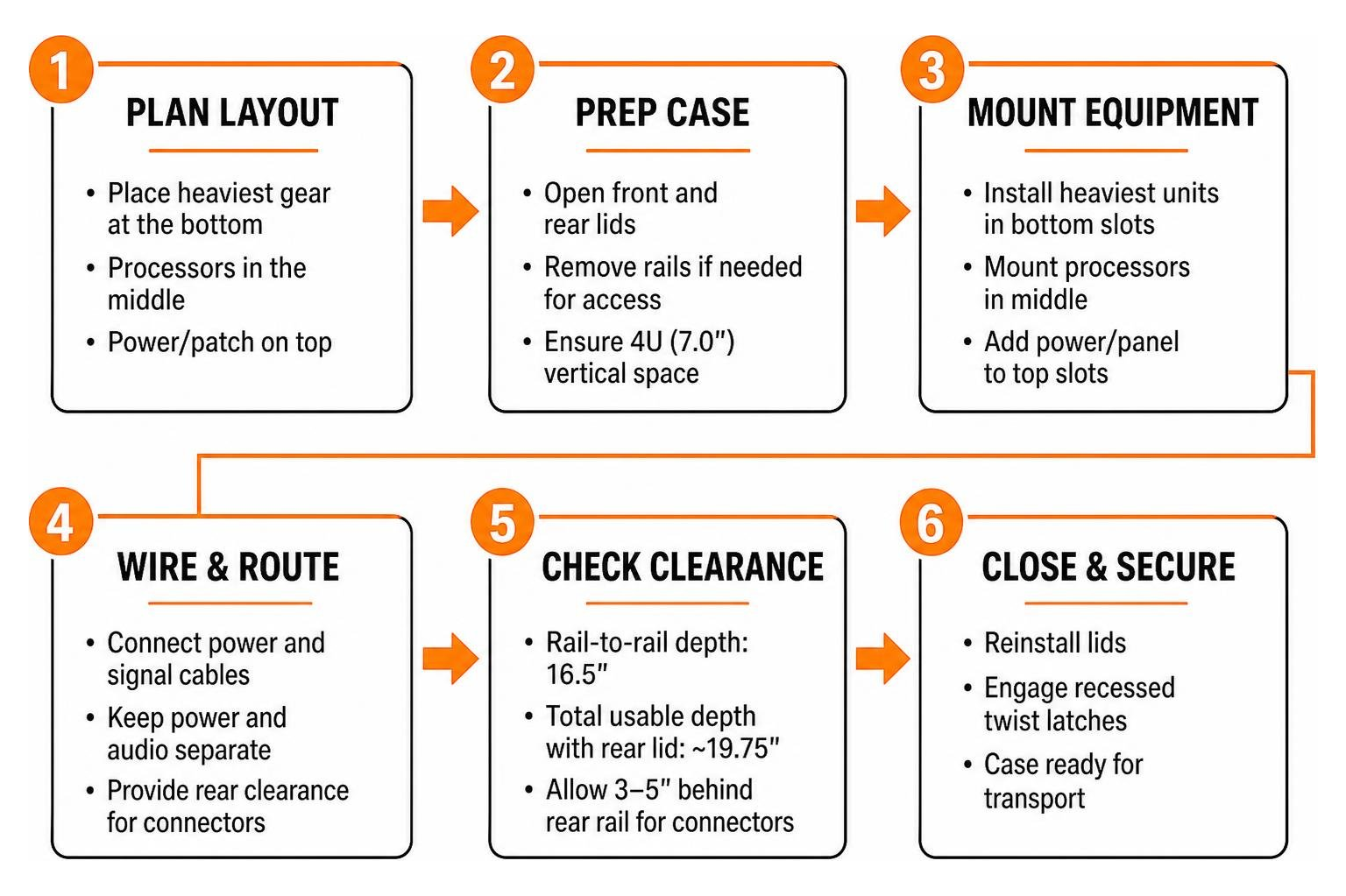
When mapping your vertical layout:
- Place the heaviest gear at the bottom: High-current power units like amplifiers for Harley belong in the lowest slots to keep the center of gravity stable.
- Mount processors in the middle: Dedicated sound processors, equalizers, and preamps sit comfortably in the middle slots for easy access.
- Use top slots for power conditioners or patch panels: Putting patch connections and power switching up top makes setup quick at the venue.
Front and Rear Mounting in a 4U Amp Rack System
A major advantage of a pro-grade case is dual rack rails (front and rear). Standard threaded 10-32 rack rails let you bolt faceplates securely to the front while adding support brackets to the rear chassis ears.
Dual rails also allow you to mount shallow gear back-to-back. For example, you can mount an active processor on the front rails and install a dedicated 1U AC power distribution strip or custom XLR/Speakon patch bay on the rear rails within the same vertical space. This layout leaves all your connections permanently wired internally, turning setup into a simple "plug in main power and run speaker leads" operation.
Power Routing, Signal Harnesses, and Thermal Management
Heat and electromagnetic interference (EMI) are the two biggest threats to audio performance. Packing high-wattage amplifiers into a compact 4U enclosure requires dedicated thermal management:
- Ventilation and Blank Panels: Never seal off every square inch if your amps rely on chassis-mounted cooling fans. Utilizing vented 1U panels allows cross-ventilation, preventing thermal throttling during long sets.
- Cable Separation: Route high-voltage AC lines and high-current 12V DC power cables down the left interior corner, while running low-level audio signals down the right corner.
- Premium Audio Interconnects: Avoid microphonics and signal loss by utilizing shielded, short-run connections such as quality RCA cables.
- Quick-Disconnect Harnesses: For mobile setups, using an amplifier to fairing speaker plug and play harness ensures you can disconnect and pull the entire electronics sled in seconds for off-board bench maintenance.
Comparing 4U Rack Materials, Construction, and Road Readiness
Different gigs require different trade-offs between physical weight, impact protection, and aesthetic finish.
| Construction Type | Shell Material | Avg. Empty Weight | Impact Protection | Weather Resistance | Best Use Case |
|---|---|---|---|---|---|
| Touring ATA Flight Case | 3/8" Plywood + Anodized Aluminum | 27 – 29 lbs | Maximum (Heavy Drops) | High (Gasket Sealed) | Commercial touring, freight shipping, band trailers |
| Polyurea-Coated Wood | High-Density Composite / Wood | 24 – 26 lbs | High (Scratch Proof) | High (Water Repellent) | Mobile DJs, weekend event pros, rough load-ins |
| Carpeted Road Case | 1/2" Plywood + Heavy Tolex/Carpet | 22 – 25 lbs | Moderate | Moderate (Absorbs moisture) | Studio storage, club installs, dry vehicle transport |
| Molded Polyethylene | High-Density Plastic Shell | 12 – 16 lbs | Moderate (Shell flexes) | Very High (Rotomolded) | Solo musicians, ultralight fly-rigs |
If your setup lives in trailers or requires stacking heavy cases, the rigidity of plywood-and-aluminum ATA construction is unbeatable. For lighter mobile applications where weight is the main priority, molded plastic or carpeted shells provide adequate support at a lower carrying weight.
Warranty Coverage, Shipping, and Return Policies for Audio Racks
When purchasing pro audio enclosures and high-end transport gear, understanding policies and consumer protections ensures your investment stays covered.
Warranty Terms
Standard pro-audio cases typically include a 5-year manufacturer warranty covering structural defects, broken latches, rail separation, and corner delamination under normal operating use. Many premium distributors offer optional extended warranty coverage up to 10 years, which includes expedited hardware replacement and accidental field damage support.
Shipping & Packaging Requirements
Due to their bulk and 32 lb shipping weight, rack cases must be shipped in heavy double-wall corrugated cartons with custom corner foam inserts. If a case is shipped loose without proper outer boxing, carrier claims for cosmetic damage or bent rails during transit are typically denied.
Returns and Restocking Guidelines
- Money-Back Guarantee Windows: Standard purchases come with a 30-day money-back guarantee, though select premium retailers offer extended return windows up to 180 days.
- Non-Returnable Conditions: Racks that have been permanently modified—such as drilled chassis holes, modified rails, glued-in cable ties, or custom-cut interior foam—are non-returnable.
- Refund Processing Timelines: Once a returned case is inspected at the distribution facility, refunds are generally processed to the original payment method within 3 to 7 business days.
Frequently Asked Questions about 4U Amp Racks
What gear fits inside a standard 4-space rack case?
A standard 4U case accommodates any combination of 19-inch rackmount audio electronics totaling 4 units of height. Common configurations include:
- Two 2U high-power stereo amplifiers
- One 2U power amplifier, one 1U digital signal processor (DSP), and one 1U power conditioner
- A 3U high-current touring amp paired with a 1U vented spacer or wireless microphone receiver unit
- Four stacked 1U shallow effects processors or multi-channel equalizers
Can you mount equipment to both the front and rear rails simultaneously?
Yes. As long as the combined depth of the two pieces of gear does not exceed the interior rail-to-rail clearance (typically 16.5 inches), you can mount front-facing equipment on the front rails and auxiliary components (like power strips, distribution blocks, or audio patch panels) on the rear rails.
What is the difference between standard and extended rack warranties?
Standard 5-year warranties cover manufacturing defects, delamination, and material failures under regular operational use. Extended warranties (often up to 10 years) broaden coverage to include wear-and-tear items like rubber feet, spring-loaded handle tensioners, and expedited replacement parts without requiring you to ship the entire heavy enclosure back to the factory.
Conclusion
A well-built 4U rack protects your electronics from rough roads and unpredictable gig environments. By securing your gear with rugged rails, shock-absorbing corners, and clean wiring, you protect your electronics while speeding up setup and teardown times.
At American Hard Bag, we design high-performance audio systems and mounting solutions engineered to withstand the extreme vibration, heat, and weather demands of the open road. Whether you are outfitting a mobile touring rig or building a custom motorcycle audio powerhouse, choosing the right amplifier racks and connection hardware ensures your sound stays crisp, clean, and dependable through every mile.