

Why Boat Speaker Covers Are Essential for Marine Audio Protection
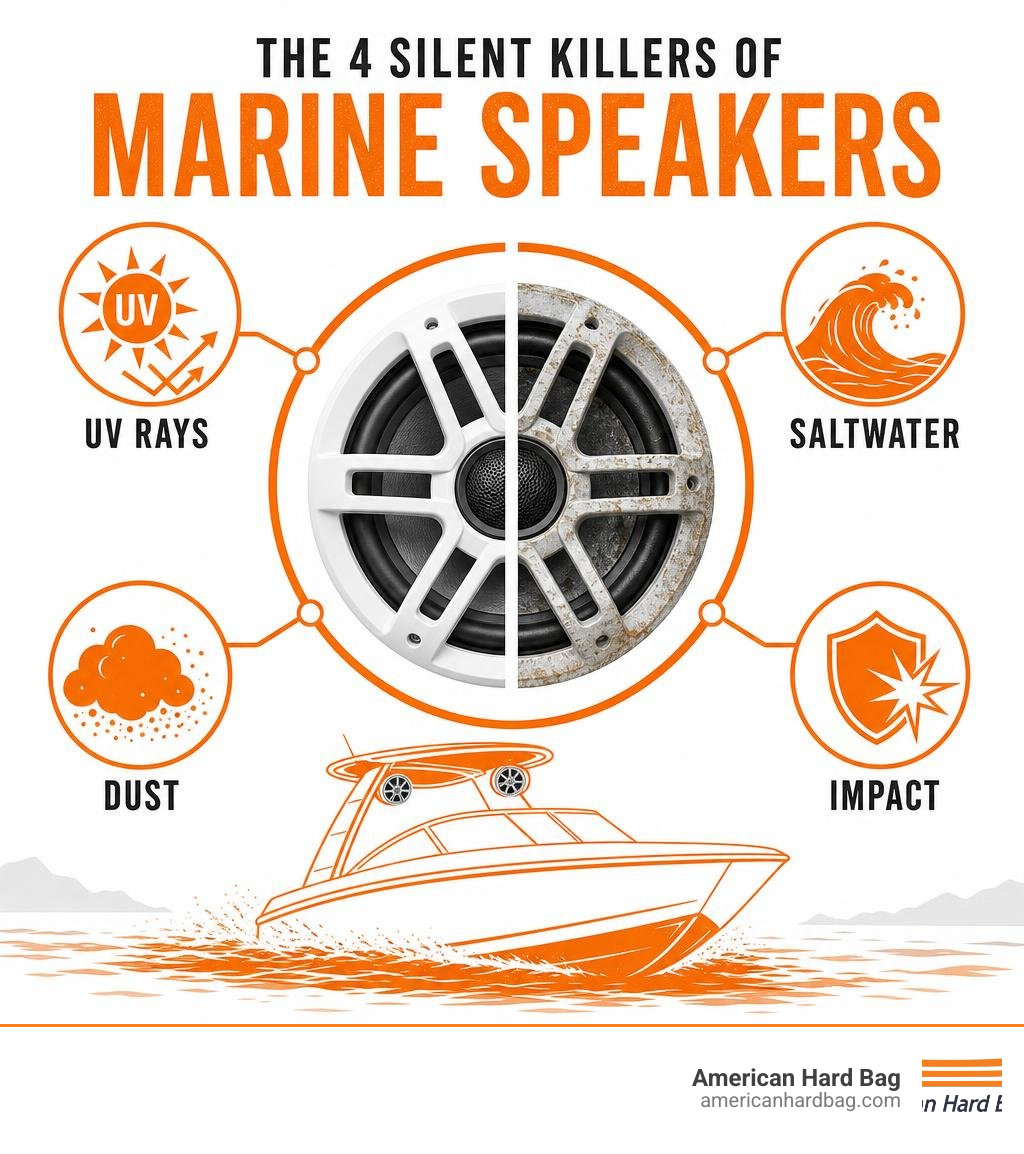
Boat speaker covers protect your marine audio system from the four biggest threats on the water: UV rays, saltwater, moisture, and physical impact. Without them, even premium speakers can degrade in a single season.
Quick answer — what to look for in a boat speaker cover:
- Material: Silicone and hard-shell polymer outlast neoprene in direct sun
- Fit: Match the cover to your exact speaker diameter (6.5", 7.7", 8.8", 10", or 12")
- Ventilation: Look for drainage eyelets or ribbing to prevent moisture buildup inside the cover
- Fastening: Zippered or screw-mounted covers hold better during trailering than drawstring styles
- Compatibility: Confirm fit with your brand — JL Audio, Fusion, Wet Sounds, Kicker, and others have specific sizing
Your marine speakers are a real investment. But a lot of boat owners skip the covers — until it's too late. As one boater put it after a single Texas summer destroyed their speakers, the sun alone did more damage than any splash ever could. Water is the obvious threat. UV rays and dust are the silent killers that slowly degrade speaker cones, grills, and electrical connections without any warning.
Whether your boat is wet-slipped, trailered, or stored indoors between seasons, the right cover makes a significant difference in how long your speakers last.
At American Hard Bag, we build premium protective accessories for riders who demand the best — and that same thinking applies to boat speaker covers. Our expertise in durable, weatherproof audio protection gives us a unique perspective on what separates a cover that lasts from one that fails after a single season.
Choosing the Right Boat Speaker Covers for Your Marine Audio Setup
When shopping for boat speaker covers, the sheer variety of materials can feel overwhelming. You will run into silicone, neoprene, hard-shell polymers, and heavy-duty canvas fabrics. Each material has distinct advantages and disadvantages depending on how and where you use your boat.
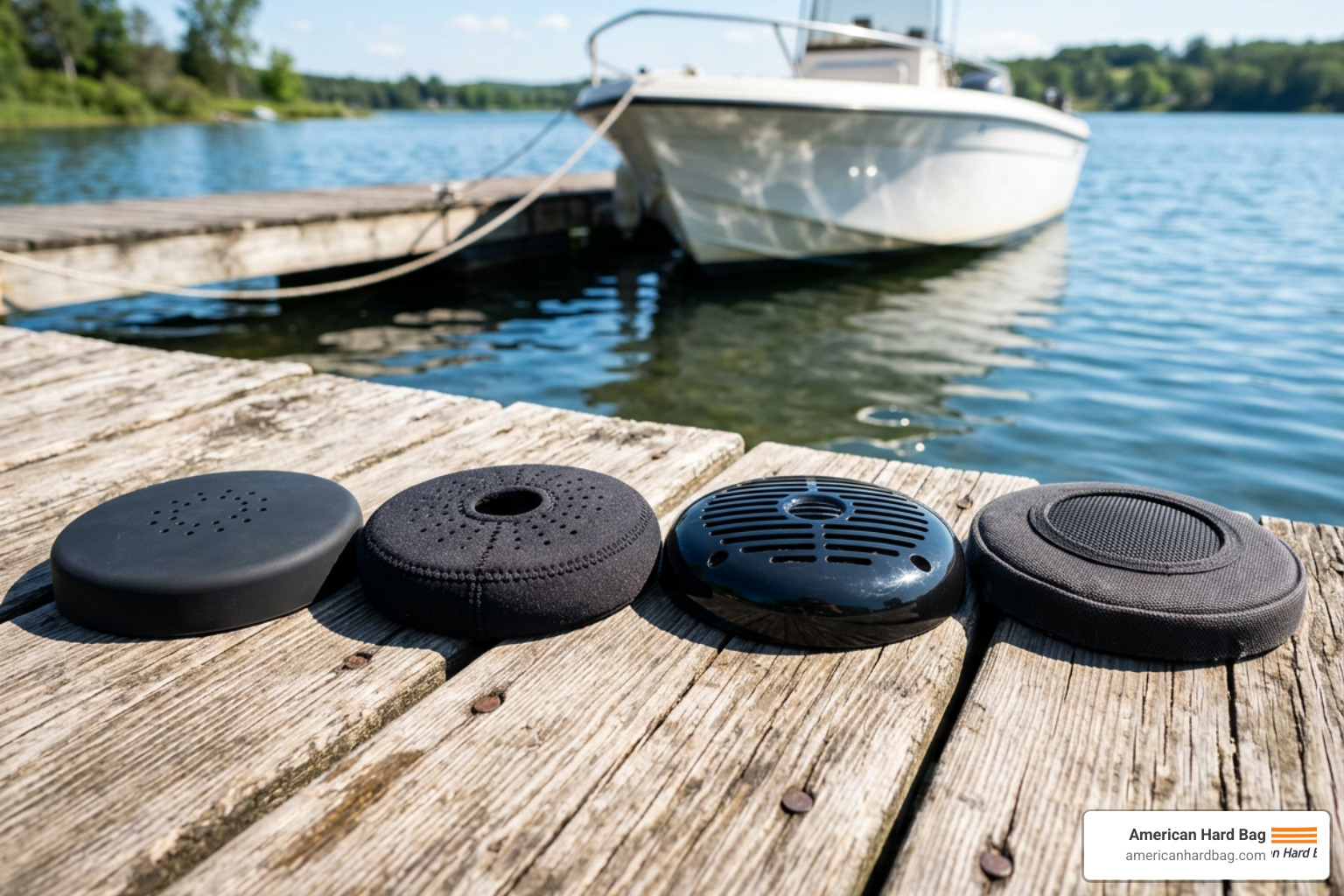
To help you choose the right armor for your sound system, let's break down how these materials compare across key performance categories:
| Material Type | UV Resistance | Saltwater Protection | Impact Defense | Best Use Case |
|---|---|---|---|---|
| Hard-Shell Polymer | Outstanding | Outstanding | Maximum | Wet slips, sandbar runs, high-impact areas |
| UV-Rated Silicone | Excellent | Excellent | Moderate | Daily dock use, quick-on/quick-off protection |
| Marine Polyester (e.g., WeatherMAX) | Excellent | Very Good | Light | Trailering, highway transit, tower speakers |
| Neoprene | Poor | Good | Moderate | Budget storage, indoor carports |
Why Neoprene Boat Speaker Covers May Fail in Direct Sunlight
Neoprene is a popular choice for budget-friendly covers because it feels thick, stretches easily, and cushions against light bumps. However, experienced boat owners on forums like JetBoaters.Net frequently warn that neoprene is highly susceptible to thermal and UV degradation.
When exposed to direct sunlight and intense summer heat day after day, neoprene tends to discolor, lose its elasticity, and literally self-destruct or crumble within a single season. If your boat is wet-slipped or parked in an open driveway, a fabric cover like those made by SewLong Speaker Covers using premium WeatherMAX® 80 fabric will hold up significantly longer under the sun.
Hard-Shell vs. Soft Fabric and Silicone Protection
If you want the absolute highest level of defense against physical damage, hard-shell covers are the gold standard. While soft fabric and silicone covers shield your speakers from dust and light spray, they cannot stop a heavy wakeboard, a stray fishing hook, or a passenger's foot from puncturing a speaker cone.
Hard-shell covers, such as the Speaker Shield 6.5" Covers, are constructed from marine-grade, UV-stabilized impact-resistant polymers. These covers act as physical armor. They are particularly valuable for low-mounted cockpit speakers or massive subwoofers that sit in high-traffic areas of the deck, such as where people stand during sandbar runs. For larger setups, choosing a rigid guard like the Speaker Shield 10" Covers ensures your heavy-duty audio gear remains completely safe from accidental impacts.
Design Features: Fastening Systems and Moisture Control
A cover is only as good as its ability to stay in place and keep the elements out without creating new problems underneath. How a cover attaches to your speaker matters—especially when you are cruising down the highway or battling high winds.
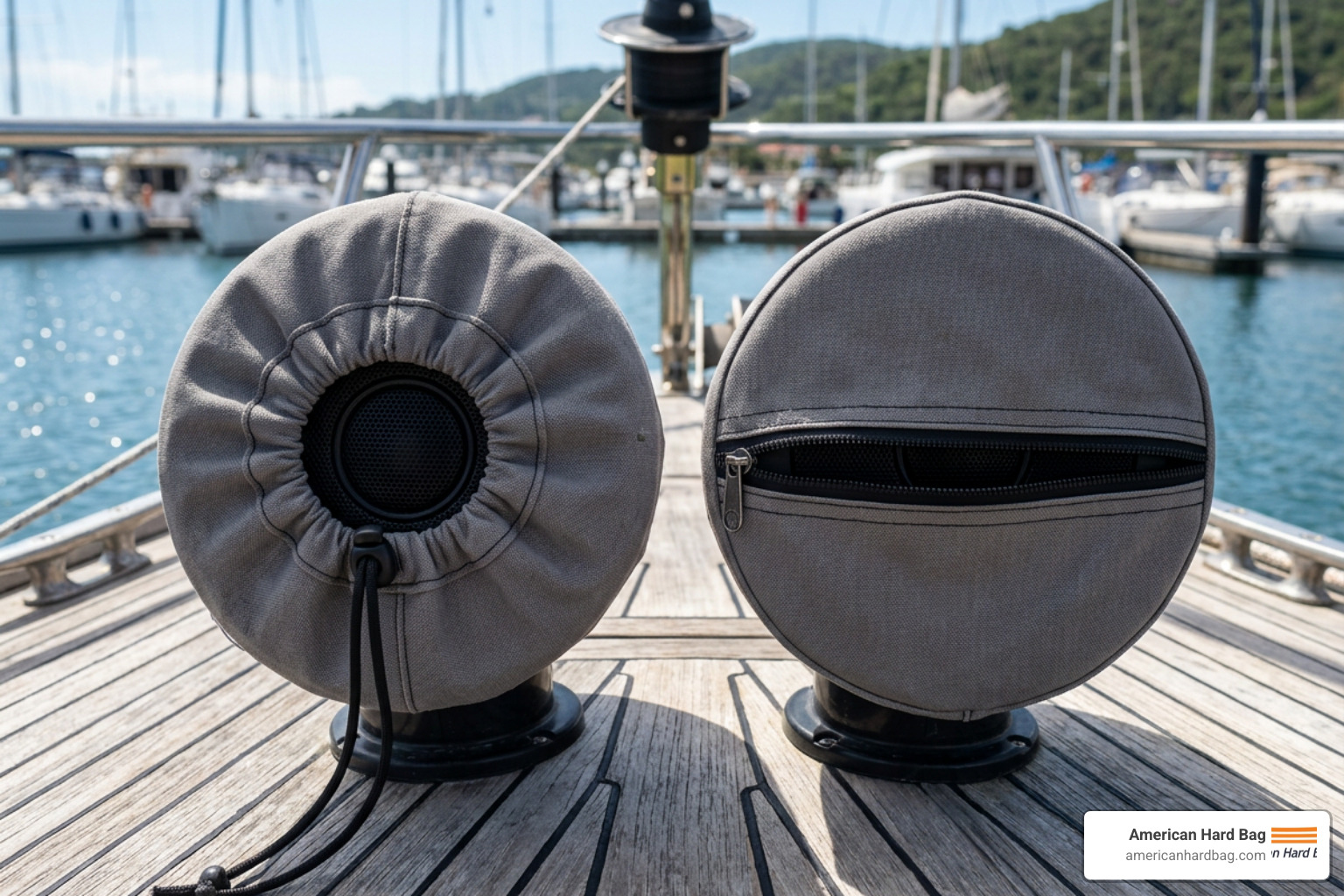
There are three primary fastening styles:
- Drawstring / Cinch Covers: These are highly adjustable and easy to slip on, making them great for stationary dock use. However, at highway trailering speeds (60+ MPH), drawstrings can loosen, causing the fabric to flap violently and potentially fly off.
- Zippered Enclosures: Often used for wakeboard tower speakers, these covers use heavy-duty marine zippers (like #10 coil zippers) to create a tight, secure wrap. Premium options like Wet Sounds Rev10 Covers wrap snugly around the speaker pod and won't budge during high-speed transit.
- Rigid Snap-On / Screw-Mounted: Hard-shell covers often use a two-part system featuring a semi-permanently mounted frame and a removable protective lid. This gives you a clean, flush look and total security without any fabric to flap.
The Importance of Drainage and Ventilation Features
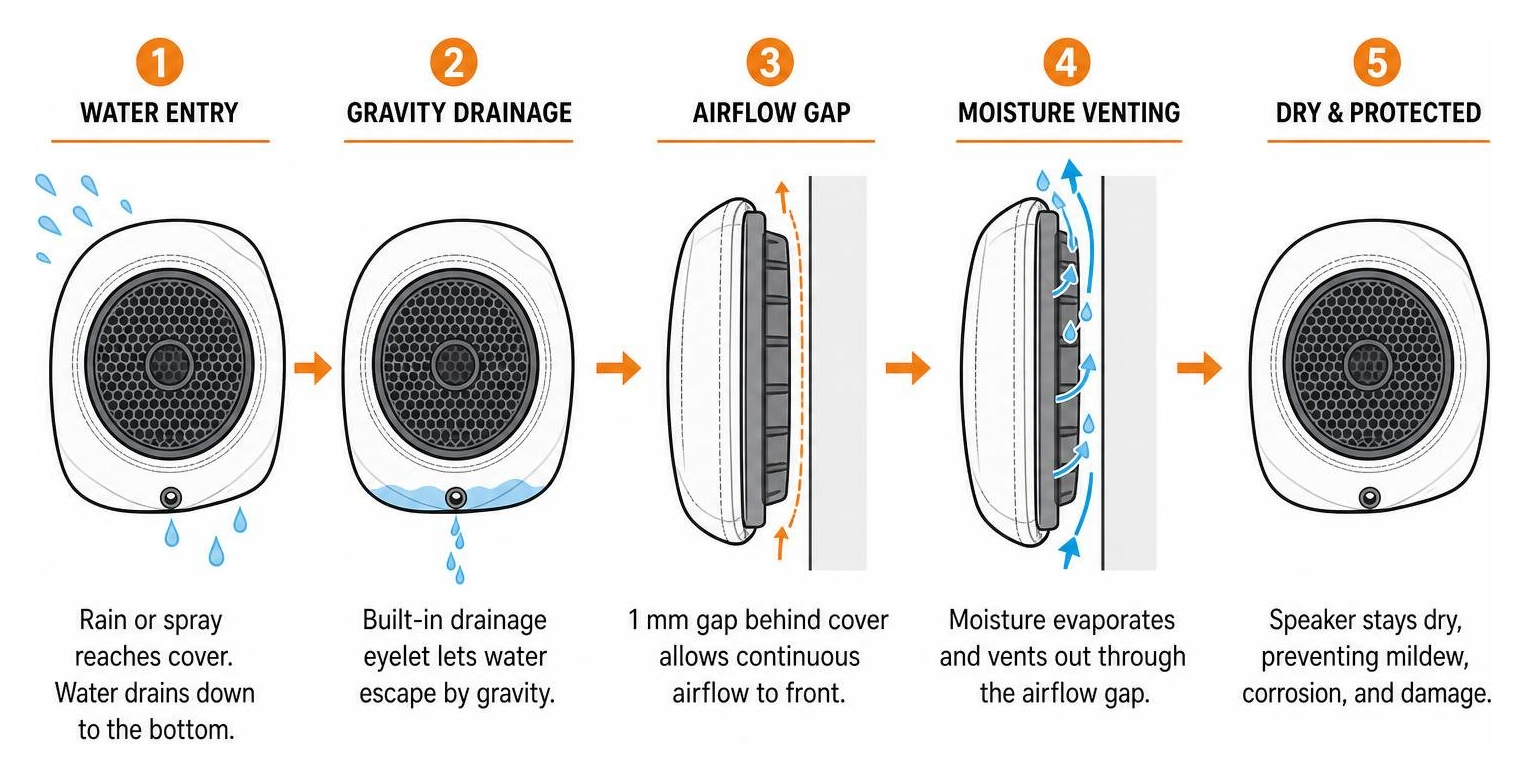
One of the biggest mistakes boaters make is sealing their speakers in an airtight cover. When temperature fluctuations occur, moisture condenses inside the cover. If that moisture cannot escape, it pools inside the speaker cone, leading to mildew, corrosion, and ruined voice coils.
To prevent this, high-quality fabric covers feature built-in drainage eyelets at the bottom to let gravity do its job. For silicone covers, advanced designs—like the patented ribbing on the backside of MarineSpeakerCovers.com 7.7" Covers—allow trapped moisture to vent.
When installing silicone covers, we always recommend leaving a tiny 1 mm gap between the boat's fiberglass gelcoat and the backside of the cover to ensure proper airflow.
Sizing, Brand Compatibility, and Custom vs. Universal Fit
Finding the right fit is critical. A cover that is too loose will collect water and flap in the wind, while a cover that is too tight can tear or put unnecessary stress on your speaker's mounting hardware.
Sizing and Brand Compatibility for Boat Speaker Covers
Marine speakers are categorized by their nominal cone size (typically 6.5", 7.7", 8.8", 10", or 12"), but the actual outer diameter of the speaker grill varies significantly by brand. A 7.7-inch speaker from JL Audio might have a slightly different outer footprint than a 7.7-inch speaker from Fusion or Wet Sounds.
To get the perfect fit, always measure the total outer diameter of your speaker's grill from edge to edge before ordering. For example, if you have mid-sized premium speakers, choosing a pair of Speaker Shield 8.8" Covers ensures a watertight, glove-like fit designed specifically for that larger profile. If you have 7.7-inch speakers, options like the 7.7" Marine Speaker Covers (Pair) – Rigid UV & Impact Protection – Speaker Shield or the flexible silicone 7.7 Inch Pair of Marine Speaker Covers – MarineSpeakerCovers.com provide excellent, snug alternatives.
Always check the manufacturer's return policy before buying. MarineSpeakerCovers.com offers a reassuring 30-day money-back guarantee, while Speaker Shield provides a 14-day return window. This peace of mind is incredibly helpful if your custom grills have an unusual shape that doesn't play nice with standard sizing.
Installation, Maintenance, and Use Cases
How you protect your speakers depends heavily on how you store your boat:
- Wet-Slipped Boats: Your speakers face constant sun, salt air, and bird droppings. Use rigid polymer or UV-rated silicone covers daily.
- Trailered Boats: High-speed wind is your enemy. Use zippered fabric covers or hard-shell covers with secure mounting. Avoid loose drawstring covers that can fly off on the freeway.
- Indoor/Winter Storage: Dust is the primary threat here. A breathable polyester cover is perfect for keeping your system clean without trapping winter moisture.
For large-format subwoofers, which are often mounted low in the boat and are highly vulnerable to passengers' feet and gear, a heavy-duty single cover like the Speaker Shield 12" Subwoofer Cover is the ultimate offseason and sandbar defense.
To maximize the lifespan of your covers, wash them periodically with mild soap and fresh water to remove salt buildup. If you are using fabric covers, applying a high-quality fabric protectant spray (like Scotchgard) once a season will keep them highly water-resistant.
Frequently Asked Questions about Marine Audio Protection
Do boat speaker covers affect sound quality when left on during use?
Yes. Marine speaker covers are designed to block water, dust, and debris, which means they also block sound waves. Leaving them on while playing music will result in heavily muffled, distorted sound. Always remove your covers before turning on your sound system to enjoy the crisp, high-power audio you paid for.
Can I use tower speaker covers for in-boat speakers?
Generally, no. Wakeboard tower speaker covers are designed as deep, bag-like enclosures to wrap around the entire speaker "can" or pod hanging from your tower. In-boat speakers are typically flush-mounted into the boat’s fiberglass walls, meaning they require flat, shallow covers that shield only the front face of the speaker grill.
What is the typical price range for quality marine speaker covers?
Prices vary based on size, material, and brand. Standard soft fabric or neoprene covers typically range from $35 to $60 per pair. High-end, military-grade silicone covers or rigid polymer shields generally run between $75 and $115 per pair, depending on the size of the speakers. While cheaper options exist on online marketplaces, investing in a high-quality, UV-stabilized cover will save you hundreds of dollars in speaker replacement costs down the road.
Conclusion
Protecting your audio investment on the water requires the right gear. Just like we engineer rugged, high-performance audio upgrades for Harley-Davidson motorcycles at our Rocklin, California headquarters, marine audio systems require specialized, weather-resistant protection to survive the elements.
By matching your specific speaker brand and size with a high-quality, ventilated cover, you can keep your boat's sound system blasting clearly for years to come.
If you also love hitting the open road on two wheels, don't leave your bike's audio system unprotected. Check out our comprehensive guide, The Ultimate Guide to Upgrading Your Harley-Davidson's Audio System, to learn how to achieve concert-quality sound that can handle any weather.