

At its core, a portable jump starter is an independent emergency power source engineered to deliver a concentrated surge of cranking amperage directly to a vehicle's starter motor. Unlike traditional jumper cables, which require a donor vehicle and a willing Good Samaritan, a self-contained booster pack frees you from relying on anyone else on the roadside or trail.
Over the years, these units have evolved dramatically. Modern jump boxes fall into several categories:
- Ultra-Compact Lithium-Ion Units: Extremely light handheld devices (often weighing under 1.5 to 3.5 pounds) tailored for gloveboxes, touring saddlebags, and powersports.
- Lithium Iron Phosphate (LiFePO4) Packs: High-durability multi-voltage solutions (such as 12V/24V commercial and aviation units) that offer superior thermal stability and long storage shelf lives.
- Heavy-Duty Lead-Acid Booster Boxes: Traditional, shop-grade units weighing 18 to 25+ pounds, favored by automotive garages and tow fleets for sustained cranking against large diesel engines and commercial machinery.
- Multi-Function Power Stations: Units combining jump-starting capabilities with high-output USB device charging, 120 PSI air compressors for flat tires, and high-lumen utility work lights.
How a Portable Jump Pack Works Under the Hood
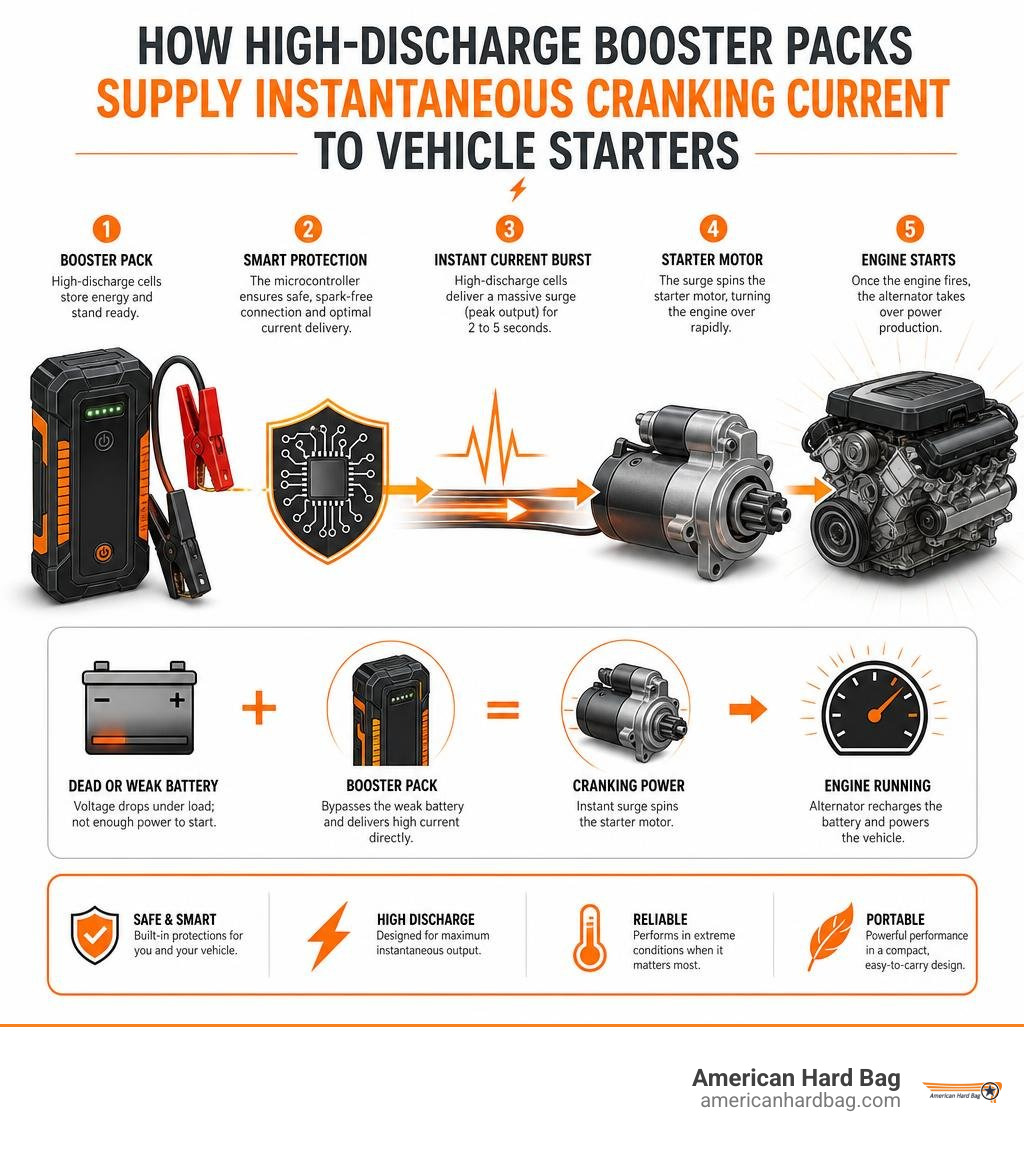
When you turn your ignition key, the starter motor draws hundreds of amperes within a fraction of a second to spin the flywheel and turn the engine over. If your vehicle battery is deeply discharged, its internal resistance spikes and its output voltage collapses under load.
A portable booster bypasses the drained chemical capacity of your main battery. Inside the pack, high-discharge lithium-ion, LiFePO4, or AGM cells are wired to heavy-gauge copper booster cables through a solid-state microcontroller. When connected, the pack stabilizes system voltage and delivers a massive current burst (often 800A to 6000A peak output) across 2 to 5 seconds. This instantaneous surge turns the starter motor over rapidly without melting internal wiring or overloading sensitive vehicle computers. Once the engine fires up, the vehicle's alternator takes over power generation.
Ensuring your machine has a rock-solid primary battery—such as a rugged AGM Battery by XS Power PSX30L—works hand-in-hand with keeping a booster pack on board to eliminate electrical failures entirely.
Real-World Applications vs. Pop-Culture Jump Packs
While drivers and motorcyclists rely on automotive jump packs for roadside recovery, the phrase "jump pack" also carries fun and distinct meanings across action sports and popular culture:
- Extreme Sports and Urban Freeriding: In the action sports realm, items like the portable launch ramp engineering from Jumpack allow BMX riders, skateboarders, and scooter athletes to carry a 6 kg composite kicker ramp in a backpack, deploying a ramp in seconds to clear gaps exceeding 30 feet.
- Sci-Fi Gaming and Tactical Fiction: In tabletop and video gaming universes like Warhammer 40k, a jump pack is a promethium-fueled, back-mounted jet turbine that propels armored assault troops across battlefields for roughly a dozen combat leaps. Similarly, BattleTech infantry jump systems describe thruster backpacks capable of assisted 100-meter leaps, while games like RimWorld feature chemfuel-powered utility packs that let colonists leap over enemy lines.
Back in the real world, however, our mission is simpler: making sure your motorcycle, car, or truck starts on the first crank every time you hit the starter switch.
Choosing the Right Jump Pack: Key Specifications and Chemistry
Selecting the right emergency starter comes down to understanding battery chemistry, realistic power delivery, and cable ergonomics.
| Specification / Feature | Compact Lithium-Ion (Cobalt) | Lithium Iron Phosphate (LiFePO4) | Heavy-Duty Lead-Acid (AGM) |
|---|---|---|---|
| Typical Weight | 1.4 to 3.5 lbs | 3.5 to 5.0 lbs | 17.0 to 25.0+ lbs |
| Peak Current Range | 800A – 6,000A | 1,000A – 3,000A | 1,000A – 2,200A |
| Cranking Burst Duration | 2 to 5 seconds (auto-cut) | 3 to 6 seconds | Up to 30 seconds continuous |
| Self-Discharge Shelf Life | Recheck every 6 months | Up to 12 months | Recharge every 30 days |
| Sub-Freezing Performance | Degrades below 15°F (-9°C) | Stable down to 0°F (-18°C) | Excellent cold-weather cranking |
| Energy Storage (Wh) | 30 Wh – 100 Wh | 60 Wh – 150 Wh | 200 Wh – 410 Wh |
| Best Use Case | Saddlebags, gloveboxes, everyday cars | Multi-voltage (12V/24V), aviation, powersports | Auto repair shops, tow trucks, heavy diesels |
Battery Chemistry: Lithium-Ion vs. LiFePO4 vs. Lead-Acid
The chemical makeup inside your booster pack dictates how it behaves in extreme temperatures and how long it holds a charge in storage:
- Lithium-Ion (NMC/Cobalt): Offers tremendous power-to-weight density. Models like the compact NOCO Boost Plus GB40 (weighing under 1.5 pounds with 30 Wh capacity) or high-output Gooloo GT6000 (delivering 6000A peak output) can easily fit in a saddlebag. However, lithium cells rely on internal safety cutoffs to prevent thermal runaway if overloaded, and they lose significant output in freezing sub-zero weather.
- Lithium Iron Phosphate (LiFePO4): LiFePO4 offers unmatched chemical and thermal stability, virtually eliminating thermal runaway risks. These packs can hold their charge for up to a full year in storage and last twice as many discharge cycles as standard lithium cobalt batteries. If you are upgrading your primary vehicle battery to a Lithium Battery by XS Power PWR S5 30Q, you already know the massive weight savings and steady voltage lithium chemistry provides.
- Sealed Lead-Acid (AGM): Heavy units, such as the Clore Jump-N-Carry JNC770R (storing 410 Wh of power with long 69-inch leads), use sealed AGM lead-acid cells. While heavy, lead-acid boosters can sustain continuous cranking for up to 30 seconds and can revive completely flat batteries where smart lithium circuits fail to detect any residual voltage.
Sizing Power for Different Engines
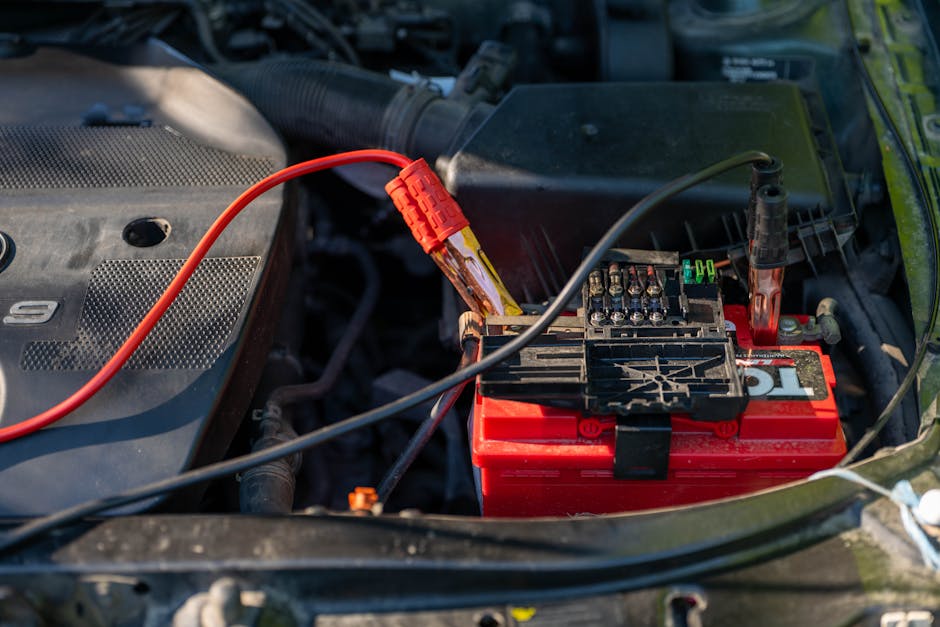
Engine displacement, compression ratios, and cylinder counts dictate how many Cold Cranking Amps (CCA) you need:
- Small Powersports & Motorcycles (under 1,000cc): Require roughly 150 to 250 CCA.
- Large V-Twin Touring Motorcycles & Passenger Cars: Require 300 to 500 CCA.
- Full-Size Trucks, Large V8s, & Small Diesels: Require 500 to 800 CCA.
- Heavy Diesel Equipment (up to 12.0L): Require 1,000+ true cranking amps and peak outputs of 3,000A to 6,000A.
Always look past inflated marketing claims. A booster advertised for "up to 8.0L gas engines" may deliver that only in perfect 70°F weather on a slightly depleted battery. For high-compression engines or freezing mornings, choosing a pack with robust peak amperage ensures you never come up short.
Safety Protocols, Features, and Operating Procedures
Modern booster packs incorporate multi-stage electronic protection circuits to keep both you and your vehicle's sensitive digital modules safe from electrical damage.

Step-by-Step Guide to Using a Jump Pack Safely
Connecting a high-discharge power pack takes less than a minute when you follow the correct sequence:
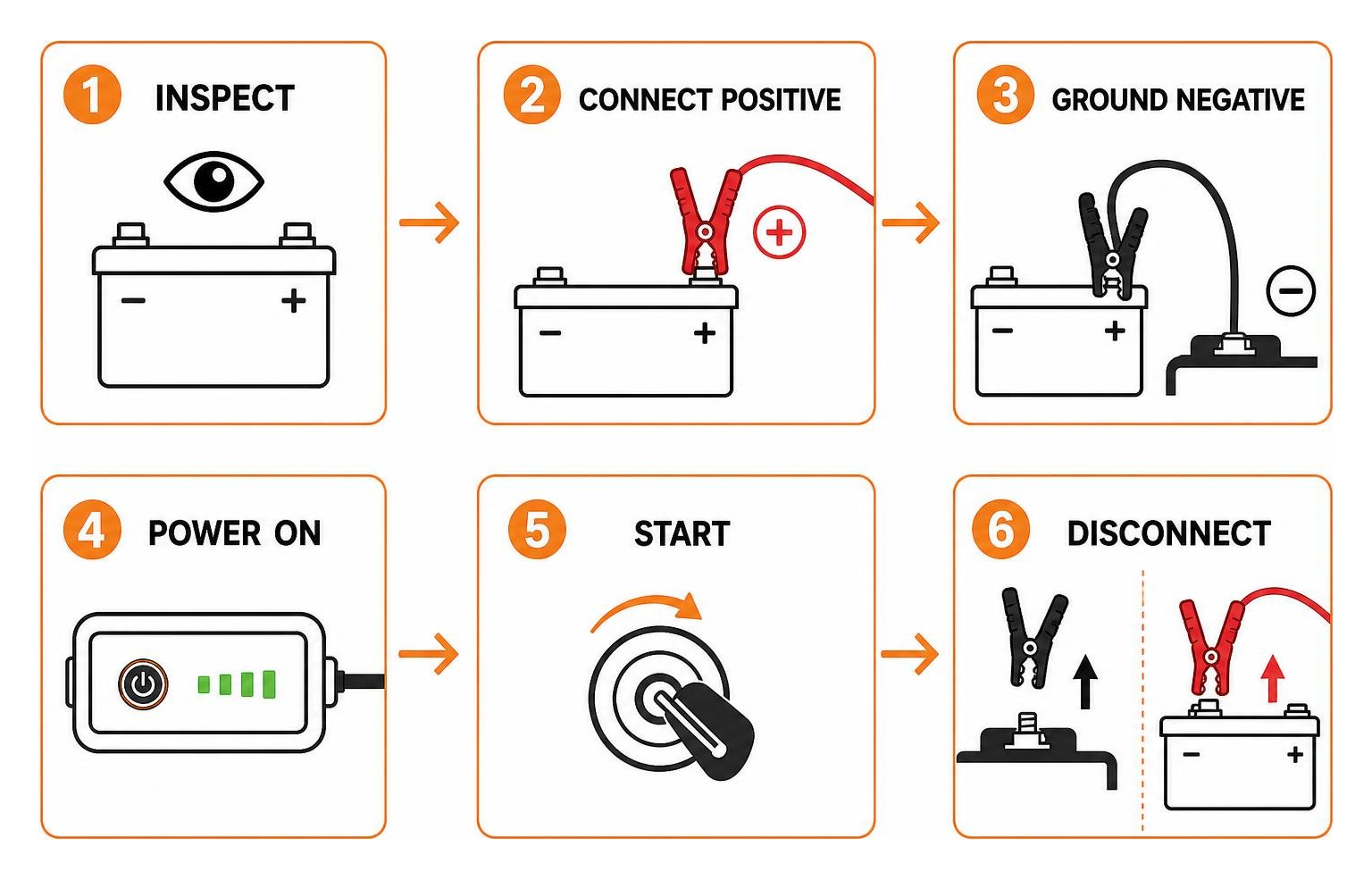
- Prep the Vehicle and Terminals: Turn off the ignition, headlights, audio systems, and all accessories. Inspect the battery posts; brush away heavy corrosion or grease to ensure clean metal-to-metal contact.
- Connect the Positive Clamp (+): Attach the RED clamp securely to the positive terminal of the weak battery.
- Connect the Negative Clamp (-): Attach the BLACK clamp to a solid, unpainted metal chassis bolt or engine ground point away from the battery. (If grounding to the frame is impractical, such as on tightly packaged motorcycle batteries, clamp directly to the negative battery terminal).
- Verify Safety Indicators: Check the booster's indicator light or digital LCD screen. A solid green light confirms correct polarity and voltage detection.
- Handle Completely Dead Batteries (Override Mode): If the vehicle battery is completely drained (below 2 to 3 volts), the booster’s smart sensor may not detect a connection. Press the manual Boost/Override button to send direct current to the leads, bypassing automated detection.
- Start the Engine: Crank the ignition for no more than 3 to 5 seconds.
- Allow Cool-Down Between Attempts: If the engine does not turn over immediately, wait 2 to 3 minutes before trying again. Continuous rapid cranking overheats lithium cells and triggers thermal safety shutdowns.
- Disconnect in Reverse Order: Once the engine is idling smoothly, remove the BLACK negative clamp first, then the RED positive clamp, and pack the unit away.
Built-in Safeguards and Emergency Capabilities
Leading booster packs feature advanced internal protections:
- Spark-Proof & Reverse Polarity Protection: Prevents power from flowing if clamps are accidentally reversed, eliminating catastrophic short circuits.
- Digital LCD Displays: Provide real-time readouts of remaining pack percentage and vehicle battery voltage.
- High-Output Utility Lighting: Multi-mode LED lights with floodlight, strobe, and emergency SOS beacon patterns for dark roadside repairs.
- Auxiliary USB Power Banks: Fast-charging USB-A and USB-C ports to recharge mobile phones, GPS units, and helmet communication headsets during roadside emergencies.
Jump Starters vs. Dedicated Battery Chargers: Maintenance and Limitations
A common point of confusion among vehicle owners is the fundamental difference between a jump starter and a dedicated battery charger.
A jump pack delivers a massive, momentary current burst (lasting 2 to 5 seconds) to turn the flywheel, relying on the vehicle's alternator to recharge the battery afterward. However, vehicle alternators are built to maintain an already healthy battery, not to bulk-charge a deeply drained core. Forcing an alternator to charge a flat battery puts significant thermal strain on your charging system.
Why a Booster Pack Cannot Replace a Dedicated Charger
To truly recover a deeply discharged battery, you need a multi-stage smart charger that delivers a slow, controlled saturation current over several hours:
- For lithium chemistry batteries, connect a specialized unit like the Lithium Battery Charger XS Power 12V 8A Intellicharger LI1208 to safely balance cells and restore resting voltage.
- For standard or high-performance AGM batteries, using a microprocessor-controlled AGM Battery Charger XS Power 12V 8A Intellicharger HF1208 ensures proper absorption and float stages without boiling electrolytes.
Routine Maintenance and Storage Best Practices
- The Six-Month Recharge Rule: Check and top off lithium booster packs every six months (or every 30 days for lead-acid boxes).
- Avoid Temperature Extremes: Never leave your booster pack baking on a hot dashboard in direct summer sunlight or exposed to sustained sub-zero winter temperatures for weeks on end.
- Store Fully Charged for Emergencies: While lithium cells stored long-term for cyclic use prefer a 50% state of charge, emergency jump packs should always be stored at 100% so they have full cranking capacity when you need them most.
Frequently Asked Questions About Jump Starters
How long should you let an engine run after jump-starting?
Let the engine run for at least 15 to 30 minutes (or go for a 45-minute continuous highway ride/drive). This allows the alternator to replenish surface charge so you can restart the vehicle if shut off. Once home, connect a dedicated smart charger to fully restore battery state-of-charge.
Can using a booster pack damage sensitive vehicle electronics?
High-quality modern jump starters feature regulated voltage clamping and reverse polarity protection designed specifically to prevent voltage spikes. As long as you use a quality unit with smart cable protections and follow correct positive-first connection procedures, your vehicle's electronic control modules (ECMs) and digital displays remain completely safe.
What is the difference between peak amps and cold cranking amps?
- Peak Amps (PA): The maximum instantaneous discharge current a pack can output for a split-second pulse under ideal laboratory conditions.
- Cold Cranking Amps (CCA): The standardized measure of how many continuous amperes a power source can deliver at 0°F (-18°C) for 30 seconds while maintaining a minimum voltage of 7.2 volts. CCA represents true real-world starting muscle against cold, stiff engine oil.
Conclusion
Carrying a reliable emergency starting pack gives you the confidence to ride and drive anywhere without the fear of being stranded by a dead battery. Compact lithium technology delivers massive starting power in packages small enough to slip into a saddlebag, glovebox, or backpack.
At American Hard Bag, we engineer premium plug-and-play audio upgrades, heavy-duty installation kits, and electrical accessories designed to handle the rigorous demands of the open road. Pairing a top-tier primary battery and smart charging maintenance with a reliable emergency device like the ZS Power 6,000mA Jump Pack ensures your electrical system remains unstoppable wherever your travels take you.