

Core Categories: Automotive, Motorcycle, and Touring Amplifier Racks
Selecting the right foundation for your audio hardware depends heavily on where and how the system operates. While mobile systems prioritize extreme space efficiency and weather resistance, pro-audio road systems focus on standardized modularity and transit shock absorption. The 19-inch rack format remains the global standard for professional touring and installed audio equipment.
| Specification / Feature | Mobile (Automotive & Motorcycle) | Pro Audio / Touring |
|---|---|---|
| Standard Sizing | Vehicle-specific footprints (10.5" to 59" widths) | 19-inch EIA rack units (3U up to 16U+) |
| Primary Materials | CNC HDPE, ABS, acrylic, powder-coated steel | 3/8" laminated birch plywood, aluminum extrusions |
| Mounting Strategy | Factory bolts, structural bonding, no-drill plates | Steel rack rails, cage nuts, 10-32 machine screws |
| Vibration Protection | Acoustic decoupling, Delrin isolators, structural rigidity | Internal rubber elastomeric shock-mount frames |
| Cooling Method | Passive chassis conduction, natural cabin airflow | High-CFM internal fans, front-to-rear flow tunnels |
| Power Distribution | 12V fused distribution blocks, heavy-gauge wire | 120V/208V/240V mains, 32A three-phase power distro |
Automotive and Motorcycle Amplifier Racks
In custom vehicle audio, space is always at a premium. Motorcycle audio installations in particular must survive severe road shock, engine vibrations, temperature swings, and moisture exposure.
For Harley-Davidson touring motorcycles, amplifier mounting generally splits into two zones: the front fairing and the saddlebags. In the fairing, precision brackets bolt directly into factory locations behind the headlight, keeping the amplifier securely anchored without interfering with wiring harnesses or the outer shell.
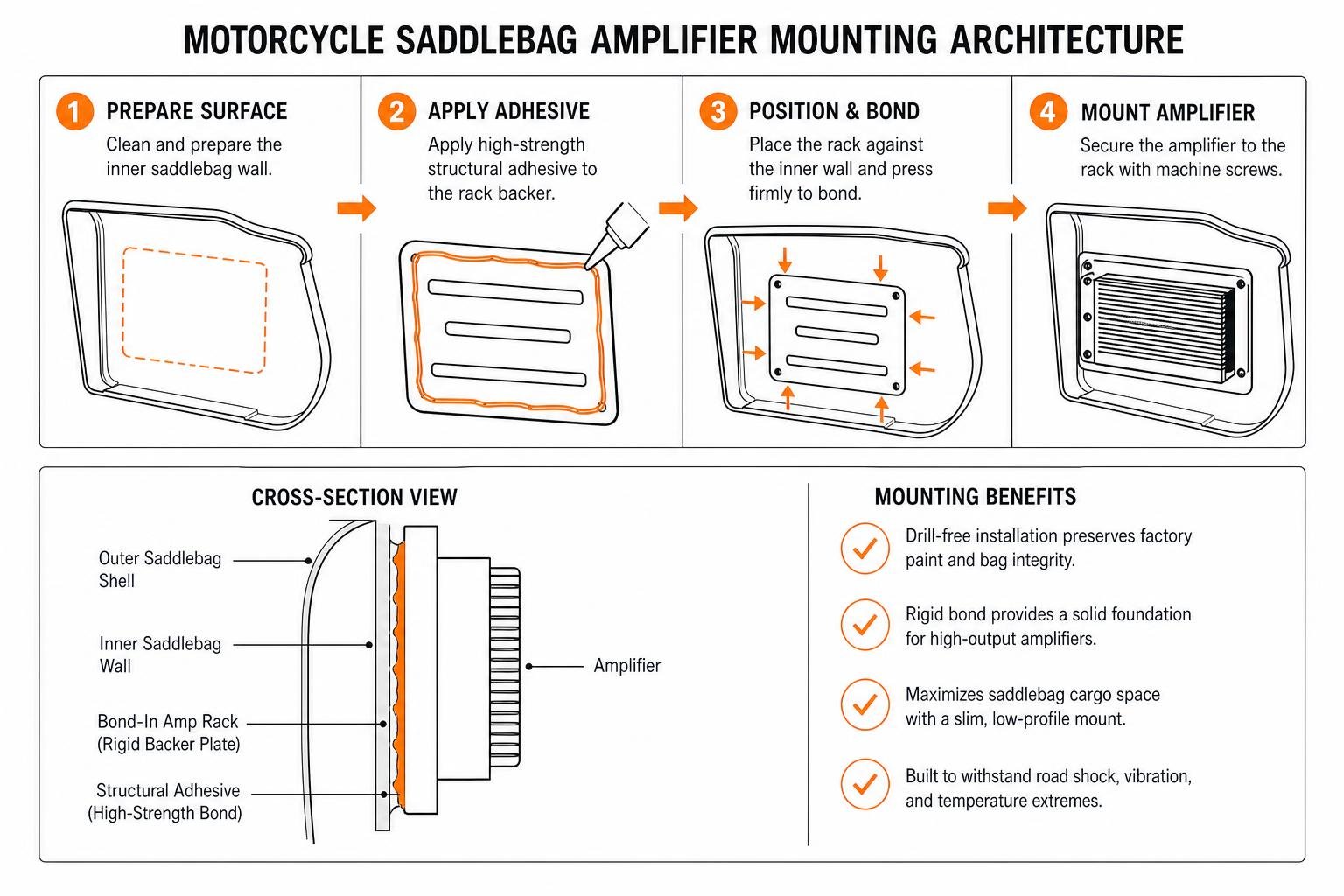
In the saddlebag, maximizing luggage capacity requires slim, rigid mounting. Our Velocity Bond-In Amp Rack for Saddlebags provides a rigid foundation that adheres flush against the bag's inner wall using high-strength structural adhesive. This strategy eliminates the need to drill external holes through your painted factory bags. If you want to see how clean this process is, follow our step-by-step guide on Bond-In Amplifier Rack Installation to ensure a rock-solid, permanent bond that easily handles high-output units from our Amplifiers for Harley Collection.
In pickup trucks and SUVs, automotive amp racks mount behind the rear folding seats or directly under the seat frames. Quality aftermarket plates are precision-cut from 1/4" fire-resistant ABS, Acrylic, or High-Density Polyethylene (HDPE), ranging from compact 10.5" driver-side plates up to 59" full-width back-wall arrays. These plates line up with existing factory cab bolts, eliminating sheet metal drilling while keeping high-power gear organized and off the floor.
Pro Audio and Touring Flight Case Racks
Professional touring amplifier racks serve an entirely different operating environment. Built around the standard 19-inch rack format, these setups house massive multi-channel concert amplifiers, digital signal processors, and mains power distribution in heavy-duty flight cases.
Touring flight cases adhere to ATA-300 Category 1 standards, built to survive hundreds of flights and rough truck pack-ins. The outer shell uses 3/8-inch or 1/2-inch laminated marine birch plywood, reinforced by heavy-gauge aluminum extrusions, steel ball corners, and recessed spring-loaded handles.
Because high-power touring amplifiers can weigh 40 to 80 pounds each, heavy cases like a 16U flight case can easily tip the scales past 200 pounds once loaded. To protect delicate internal circuitry from drops and road washboard vibration, touring cases incorporate an internal floating rack frame suspended by heavy-duty elastomeric shock absorbers. These cases feature removable front and rear covers, integrated wheel boards with locking 4-inch blue casters, and top stacking dishes so multiple amp racks lock securely together in the semi-trailer.
Essential Build Materials and Thermal Management
Amplifiers generate substantial heat under heavy loads, With exception to Class D amplifiers which run relatively cool. If an amplifier cannot shed heat quickly, its internal thermal management will throttle output power or trigger emergency thermal shutdown. The build materials of your rack directly dictate structural longevity, acoustic resonance, and thermal efficiency.
Material Durability and Vibration Resistance
Not all plastics or metals are suitable for housing amplifiers. Substandard materials like untreated MDF wood absorb moisture, swell, degrade under road vibration, and introduce unnecessary fire hazards near high-current terminals.
Modern mobile audio racks rely on high-grade engineering polymers and lightweight metals:
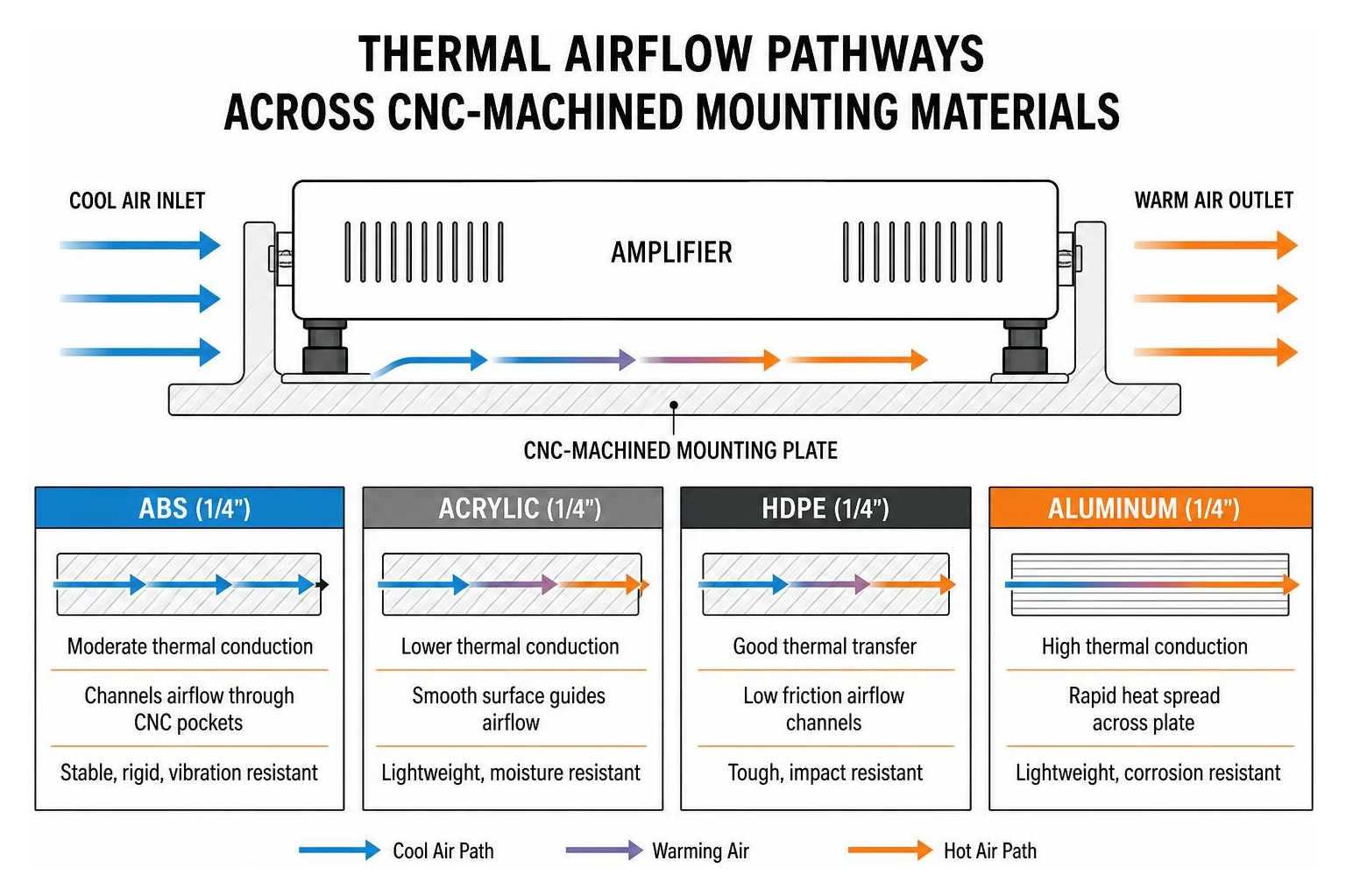
- High-Density Polyethylene (HDPE): CNC-machined HDPE is impervious to water, oil, and road chemicals. It will not crack under freezing temperatures, soften in blistering summer heat, or resonate under high bass pressure.
- Fire-Resistant ABS & Cast Acrylic: Formed 1/4" ABS blends exceptional mechanical shear strength with heat deflection, making it an outstanding material for vehicle back-walls.
- 6061-T6 Billet Aluminum: Used in high-end motorcycle fairing brackets, machined aluminum acts as a rigid, lightweight structural backbone that resists fatigue from continuous road vibration.
- Black Powder-Coated Steel: Delivers absolute stiffness for supporting multi-amplifier setups in compact spaces while preventing corrosion from salt air or high humidity.
Using dense, non-resonant materials provides natural mechanical decoupling, preventing amplifier chassis rattle when driving high-demand systems like our Velocity Amplifiers Collection.
Heat Dissipation and Hardware Fasteners
Amplifiers dissipate thermal energy through their aluminum heat sinks via natural convection and direct thermal conduction. When designing or picking an amp rack, make sure there is at least 0.5 to 1 inch of clearance around the top and side fins.
Never sandwich the bottom of an amplifier directly onto carpeting or closed-cell foam, as this traps heat against the lower plate. Using Delrin or aluminum standoffs lifts the amplifier off the rack face, creating an underneath airflow channel that drops operating temperatures significantly.
Fastener selection is equally critical. Driving coarse self-tapping sheet metal screws directly into plastic plates is a recipe for failure; road vibration will quickly strip the plastic, dropping the amplifier into moving mechanical parts or onto the vehicle floor.
High-end racks incorporate press-fit or heat-set 8-32 high-brass threaded inserts. These inserts provide reusable, ultra-strong machine threads that allow you to install, remove, and service amplifiers repeatedly without degrading the mounting plate.
When mounting your hardware, make sure your electrical setup is calibrated properly. Learning about Setting Gains the Correct Way prevents your gear from clipping and running excessively hot, ensuring long service life for premium options like our Hertz Amplifiers Collection.
Power Distribution, Signal Patchbays, and Pre-Configured Turnkey Systems
Clean cable routing is what separates amateur builds from professional audio systems. An organized amplifier rack isolates high-current DC or AC lines from sensitive low-level audio lines, eliminating alternator whine, ground hums, and signal degradation.
Modular Signal Patchbays and Networked Audio
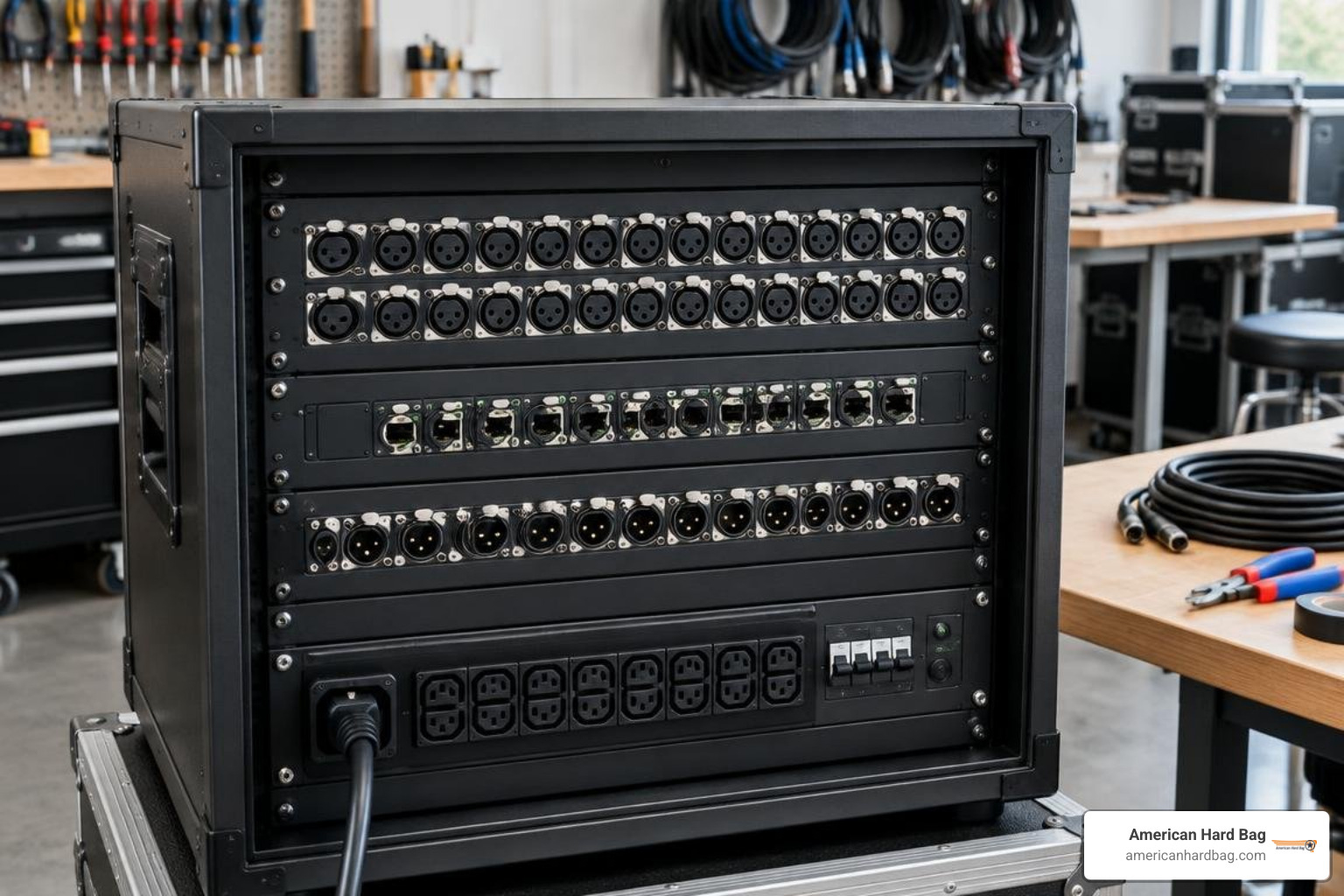
In high-power installations, technicians use dedicated signal patchbays and breakout panels mounted to the face of the rack. This keeps all necessary connections accessible without requiring access to tight rear bays.
Professional touring racks route all internal amplifier inputs to front-panel Neutrik XLR and AES/EBU digital multi-pins. Modern pro systems increasingly rely on Dante™ or AVB networked audio over rugged EtherCON Cat5e/Cat6 lines. This allows hundreds of channels of uncompressed, low-latency 24-bit/96kHz digital audio to travel over a single lightweight network cable, completely eliminating bulky copper snakes.
In motorcycle and custom automotive racks, quick-service disconnects and custom wire looms serve the same function. When pairing your rack with dedicated hardware from our Processors Collection, using our plug-and-play Wire Harnesses Collection allows you to remove the entire saddlebag or sub-assembly in seconds for bike maintenance without cutting a single wire.
Turnkey Pre-Built vs Custom Amplifier Racks
Audio engineers and riders face a choice: assemble a custom amplifier rack component-by-component, or invest in a pre-configured turnkey rack system.
Turnkey systems are fully integrated packages where the manufacturer designs the flight case, power distribution, multi-channel processing, and high-power output stages as a single factory-tested unit. The advantages are immense:
- Engineered Reliability: Internal wiring lengths, load balancing, and cooling paths are factory optimized and QA tested under full load.
- Network Failover: Turnkey touring racks often feature automatic analog/digital failover switching so a performance never cuts out if an optical or Dante line drops.
- Rapid Load-In: Complete live systems can be dropped on a stage, plugged into a 32A three-phase drop, linked via SpeakON cables, and powered up in minutes.
On the other hand, custom-built mobile racks offer complete freedom to mix amplifier classes, fit tight factory vehicle recesses, and tailor every bracket to unique vehicle geometry. If you want a complete audio overhaul without fabrication guesswork, explore our Full Systems with Amplifier Collection for engineered packages that drop right into your bike.
Critical Mistakes to Avoid and Equipment Security
Whether building an automotive amp board or wiring a concert rack, avoiding common mechanical and electrical mistakes will save you hours of troubleshooting and protect expensive components.
- Creating Ground Loops: Never ground multiple amplifiers to different points across a vehicle chassis. Grounding to disparate sheet metal surfaces creates resistance differences that generate audible hums and alternator whine. Run all amplifier grounds to a central distribution block tied to clean chassis metal.
- Thermal Entrapment: Avoid mounting amplifiers upside down beneath rear vehicle decks unless the manufacturer explicitly rates the chassis for inverted mounting. Heat naturally rises directly back into the internal PCB, baking capacitors and triggering thermal protection.
- Using Self-Tapping Fasteners on Plastics: Avoid driving wood or sheet metal screws into polymer mounting plates. Use brass threaded inserts or pass-through machine bolts with nylon-locking nuts.
- Skipping Harness Strain Relief: Road bumps and engine vibration place continuous stress on wire terminals. Always secure wiring with zip-ties, insulated P-clamps, or braided harness sleeving within 2 to 3 inches of the amplifier terminal block to prevent wire strands from snapping or pulling loose.
- Ignoring Gain Structure During Setup: Never treat gain dials as volume knobs. Check our complete Amplifier Installation Guide to match source voltage properly and avoid driving your amplifiers into square-wave clipping.
- Equipment Theft Vulnerability: Audio components are high-value targets. Secure vehicle-mounted racks using security Torx or tamper-resistant Allen fasteners that cannot be removed with a standard screwdriver. For touring flight cases, make sure every latch includes a padlock hasp or keyed cylinder to secure the front and rear covers during transit and storage.
Frequently Asked Questions About Amplifier Racks
How do no-drill amplifier racks protect vehicle value and ease installation?
No-drill amplifier racks are engineered using 3D CAD modeling to line up with existing factory studs, seat bracket bolts, or OEM luggage hardware.
By eliminating the need to drill holes into vehicle sheet metal, trunk floors, or fiberglass saddlebags, you prevent corrosion, preserve structural rigidity, and avoid penetrating hidden gas tanks or electrical looms.
When it is time to sell or return a leased vehicle, you can remove the entire audio system in less than an hour and return the vehicle interior to showroom condition with zero evidence of aftermarket modification.
What is the advantage of using threaded inserts over self-tapping screws?
Threaded brass or steel inserts are mechanically pressed or heat-bonded into plastic and composite mounting boards to provide durable, high-torque machine threads (such as 8-32 or 10-32).
Unlike standard wood or self-tapping screws—which cut weak, temporary paths into plastic that strip after a single service cycle—threaded inserts allow you to install and remove amplifiers indefinitely.
They provide significantly higher clamping pressure and resist loosening under relentless vehicle vibration.
Why are pre-configured touring racks preferred over field-assembled setups?
Pre-configured touring amplifier racks are engineered as complete, turnkey solutions with factory-integrated power distribution, speaker patch panels, and digital signal processing.
They eliminate human wiring errors during stressful, event load-ins, feature unified safety approvals, and include internal network redundancy.
Because every connection is standardized to multi-pin SpeakON (NL4/NL8) and Dante digital lines, touring crews can deploy stadium-level amplification in a fraction of the time required to patch individual field components.
Conclusion
A well-designed amplifier rack protects your audio system against heat, vibration, and mechanical strain. Whether you are outfitting a Harley-Davidson touring bike for high-speed highway audio or prepping a concert-grade touring rig, investing in the right mounting platform ensures maximum performance, effortless maintenance, and long-term hardware reliability.
American Hard Bag leads the industry in American-engineered, precision-crafted audio solutions built specifically to conquer harsh road conditions. Browse our premium Amplifier Racks Collection to equip your ride with the strongest, cleanest mounting systems available.