

How to Choose a Waterproof Motorcycle Radio
Start with an IP67-rated unit, then check that you can read its screen in sunlight, use its controls with gloves, and connect it to your phone and helmet audio. Before buying, confirm that the mount fits your bike and that the unit can use a fused, switched power connection. A waterproof screen is only part of the setup; exposed plugs and wiring need weather protection, too.
We're American Hard Bag, a US-based maker of audio accessories built for demanding rides. That experience shapes our practical approach to choosing a waterproof motorcycle radio that fits your bike and holds up to the ride.
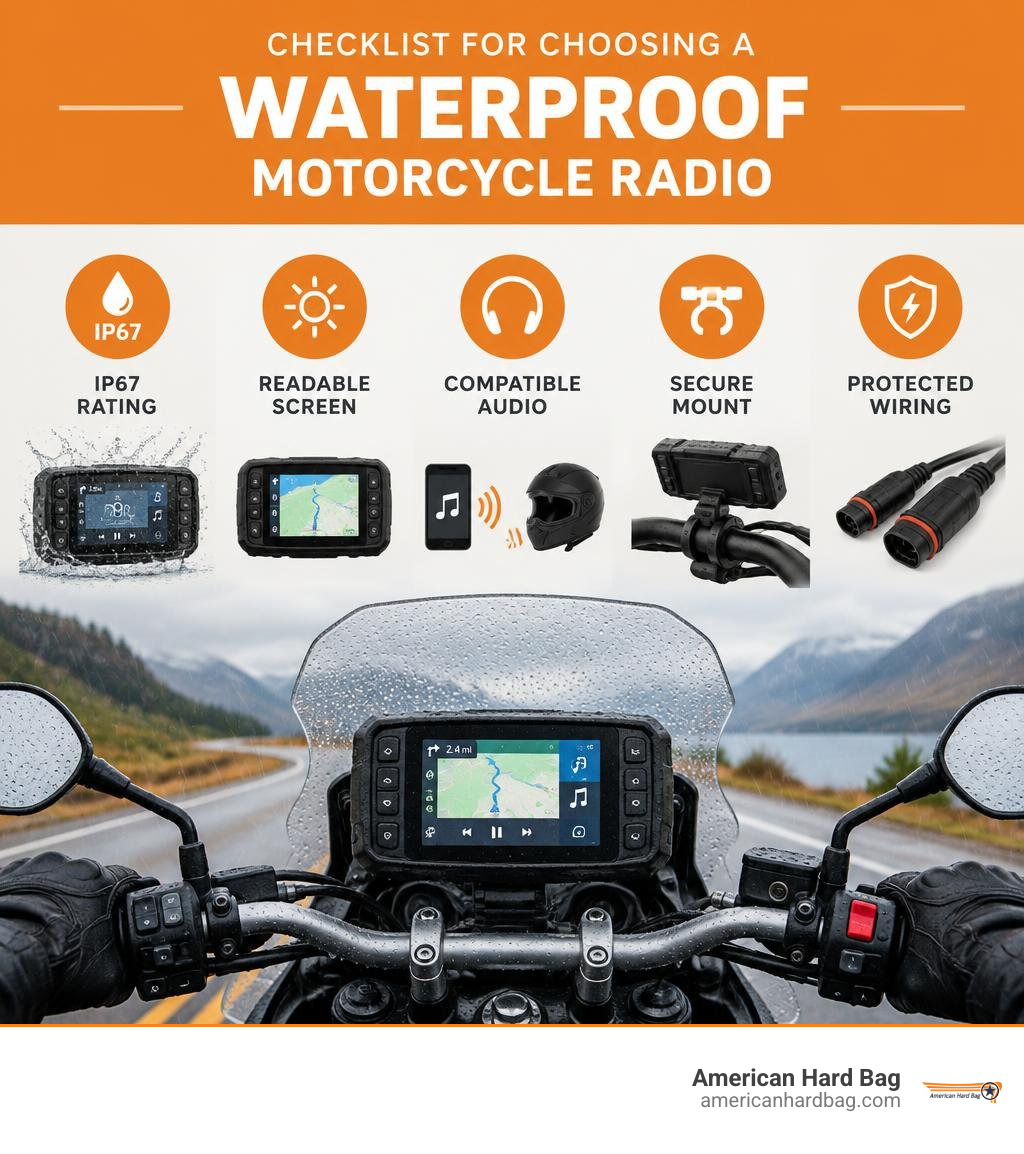
Essential Features of a High-Performance Waterproof Motorcycle Radio
Outfitting a bike for cross-country touring or daily highway commuting means preparing for sudden cloudbursts, intense desert heat, and relentless road vibration. A standard automotive headunit will quickly fail when exposed to open-air cockpit conditions. Selecting an all-weather infotainment system requires understanding how weather sealing, optical engineering, and electrical design converge to keep your maps visible and your music playing.
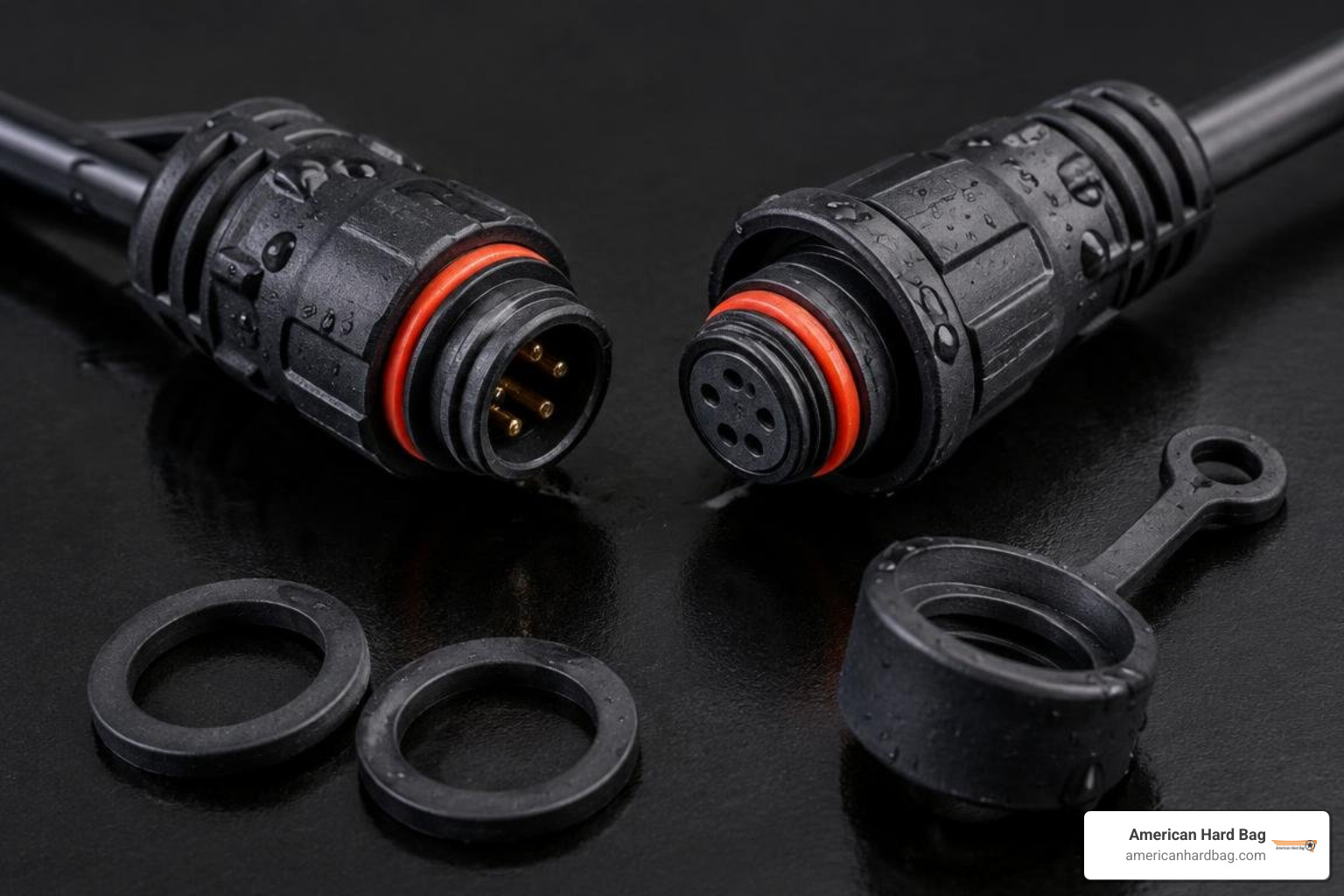
IP Ratings and Weatherproofing Standards Explained
An Ingress Protection (IP) rating consists of two digits that define a device's resistance to solids and liquids. The first digit measures protection against dust and debris on a scale of 0 to 6, while the second digit measures water resistance on a scale of 0 to 9.
For motorcycle electronics, IP67 is the baseline standard for true all-weather reliability:
- Solid Protection (6): Dust-tight construction prevents road grime, fine sand, and soot from penetrating the housing.
- Liquid Protection (7): Withstands complete immersion in water up to 1 meter (about 3.3 feet) for 30 minutes.
During real-world highway rides at 70 mph, driving rain exerts hydrostatic pressure similar to direct jet sprays. An IP67 enclosure uses chemically bonded silicone gaskets, sealed fastener cavities, and hydrophobic breathing membranes that allow pressure equalization without letting water vapor inside. This internal pressure balance prevents condensation from clouding the display glass during rapid temperature shifts.
Screen Brightness and Sunlight Readability
Direct sunlight washes out standard LCD screens, creating a safety hazard when you cannot read navigation turns at a glance. To maintain legibility at high noon, look for an IPS (In-Plane Switching) display with a peak brightness of at least 1,000 nits.
Beyond pure backlight output, look for displays built with optical bonding. By eliminating the air gap between the outer protective glass and the underlying LCD panel, optical bonding cuts internal glare and prevents internal fogging. Premium motorcycle consoles also include ambient light sensors that automatically dim the screen at night, preventing glare that degrades night vision, along with capacitive touch controllers calibrated to detect finger inputs through leather riding gloves.
Smart Connectivity: Bluetooth, Intercom, and Audio Routing
Modern rider consoles integrate smartphone power into the cockpit via wireless Apple CarPlay and Android Auto. These platforms display turn-by-turn navigation, manage streaming services, and surface incoming communications through voice commands.
If you are upgrading an older batwing or sharknose fairing, you can pair these modern displays with Harley-Davidson radio Bluetooth retrofits to preserve your factory hand controls while modernizing your wireless audio path.
Dual Bluetooth Modes for Solo and Passenger Touring
Modern motorcycle radios rely on dual Bluetooth architectures to manage complex audio routing without latency:
- Channel 1 (Smartphone to Console): Handles high-bandwidth data transfers for Apple CarPlay or Android Auto navigation, music metadata, and map rendering.
- Channel 2 (Console to Headset/Amplifier): Streams processed audio downstream to your helmet communicator or motorcycle amplifier.
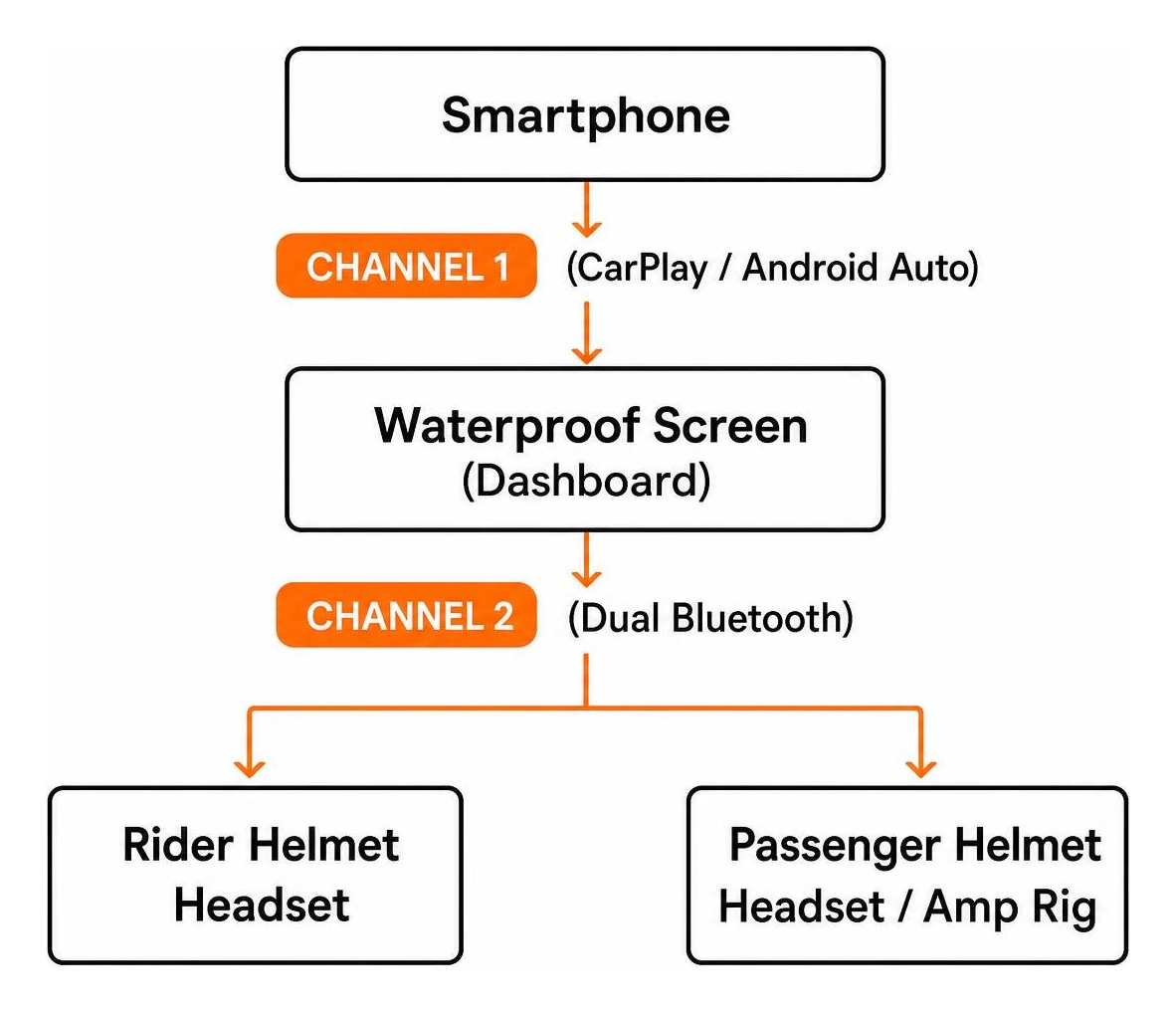
This dual-link configuration supports several audio scenarios:
- Solo Touring: Routes GPS audio prompts and high-fidelity music directly into a single helmet intercom while keeping the phone stowed in a dry pocket.
- Two-Up Riding: Broadcasts the same stereo audio track to both rider and passenger headsets simultaneously over Bluetooth 5.0.
- Fairing Audio Integration: Feeds clear auxiliary audio into your onboard fairing amplifier using a universal waterproof Bluetooth audio receiver for handlebar-controlled volume.
Troubleshooting Connection Drops and Phone Compatibility
Wireless CarPlay and Android Auto rely on 5.8 GHz Wi-Fi to transmit display data and Bluetooth to handle handshake protocols. According to the Bluetooth Special Interest Group, wireless connections can also be affected by environmental factors such as physical obstructions and radio interference. Connectivity drops usually happen when:
- High-power radio towers or dense urban infrastructure interfere with local 5.8 GHz channels.
- Smartphone aggressive battery-saver profiles suspend background app execution.
- Outdated mobile operating systems create sync handshake failures.
To maintain a steady link, disable battery optimization for motorcycle companion apps, keep your phone's OS updated, and confirm device compatibility before purchasing. Some modified smartphone distributions and locked hardware configurations do not support wireless Android projection.
Rider Safety Systems and Emergency Protection
Motorcycling demands continuous situational awareness. According to United States Department of Transportation data, motorcyclists face an accident fatality rate of 28.00 per 100 million vehicle miles traveled (VMT), compared to 1.05 for passenger car occupants. Furthermore, the most common accident scenario involves another vehicle turning across a motorcycle's right-of-way. Keeping eyes up and hands firmly on the grips directly mitigates risk.
Long-distance highway travel also exposes riders to prolonged wind noise that can cause permanent hearing damage and cognitive fatigue. High-visibility audio consoles help counter this environment by delivering clear visual and audible road warnings without requiring you to look down at your phone.
How a Waterproof Motorcycle Radio Improves Riding Safety and Navigation
A weather-sealed console mounted within your forward field of vision enhances safety across several areas:
- Line-of-Sight Navigation: Turn alerts appear directly in your peripheral view, reducing the time your eyes look away from traffic hazards.
- Voice Control: Voice assistants let you change music playlists, initiate calls, or find fuel stops without taking your hands off the handlebars.
- Tactile Handlebar Control: High-contrast, glove-friendly icons eliminate the need to fumble with small phone screens at highway speeds.
Tire Pressure Monitoring and SOS Emergency Alerts
Top-tier units incorporate real-time safety hardware directly into the visual interface. Dedicated systems offer built-in Tire Pressure Monitoring Systems (TPMS) and emergency alert systems.
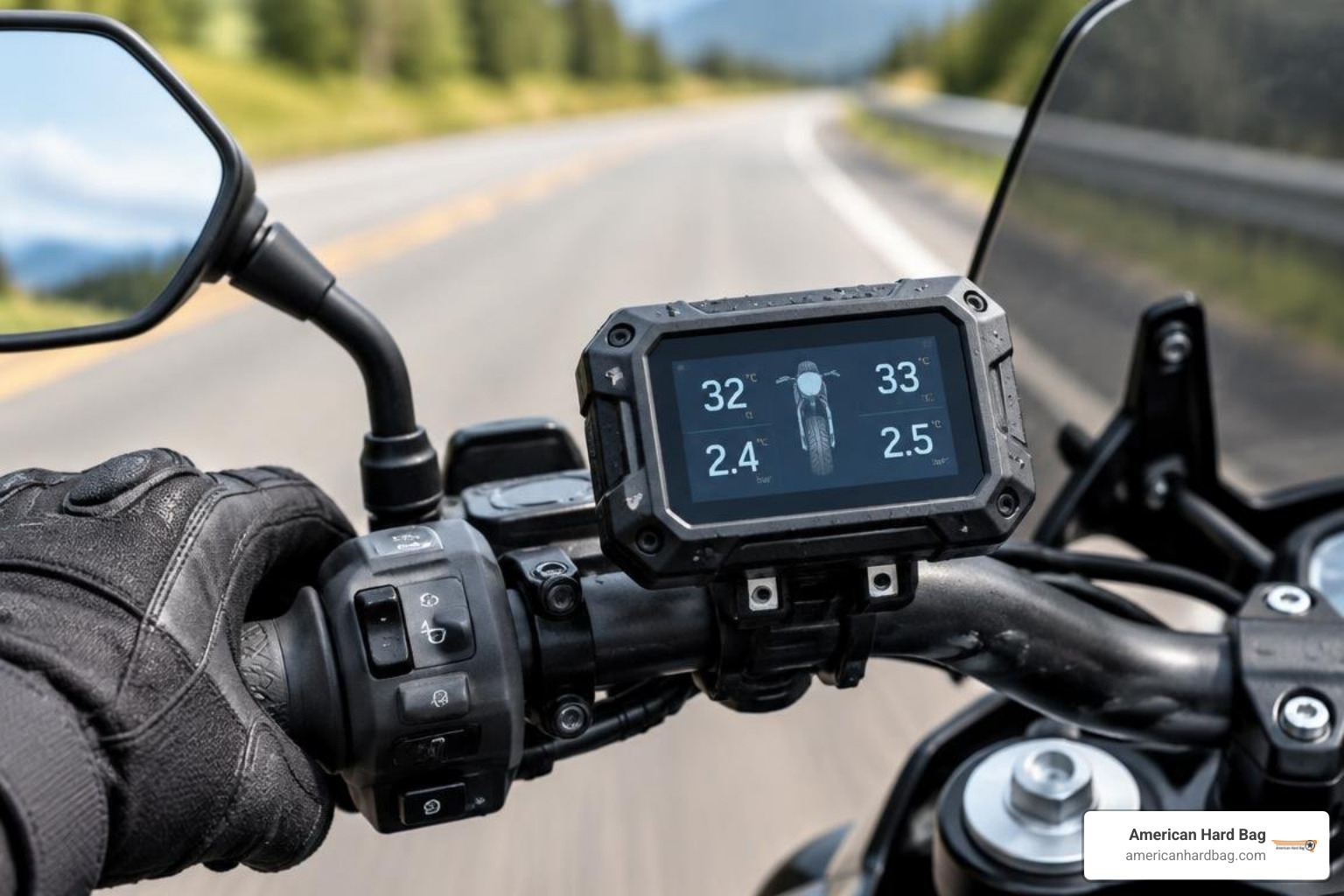
- Wireless Valve Sensors: Continuous monitoring of tire pressure and internal air temperature extends tire tread life by up to 25% and provides early warnings for slow punctures before cornering stability is compromised.
- SOS Notification Systems: When paired with your smartphone, the system can display quick-touch emergency dials or broadcast coordinates to selected emergency contacts if an impact is detected.
- Barometric and Compass Sensors: Built-in compasses and barometric altimeters track rapid elevation changes and atmospheric pressure shifts, alerting adventure and touring riders to incoming weather fronts.
Audio Hardware Integration and Headunit Alternatives
Riders typically choose between standalone IP67 bar-mounted consoles and fully integrated in-fairing headunits.
| Specification / Feature | Standalone Waterproof Screen | Integrated Marine Fairing Radio |
|---|---|---|
| Primary Placement | Universal Handlebar Clamp / Perch Mount | Factory Fairing Console Cavity |
| Screen Dimensions | 5.0-inch or 7.0-inch IPS | 6.5-inch to 7.0-inch Touchscreen |
| Waterproof Rating | IP67 (Self-Contained Immersion Rated) | IP65 to IP66 Front Face Sealing |
| Audio Output Method | Dual Bluetooth to Helmet / Line-Out Aux | Direct High-Power Speaker Outputs / Pre-Outs |
| TPMS / SOS Features | Often Available via Direct Sensor Pairing | Requires Third-Party Diagnostic Modules |
| Best Application | Cruisers, Dual-Sports, Road Kings, Naked Bikes | Batwing / Sharknose Fairing Touring Models |
Waterproof Motorcycle Radio Durability and Performance
Mounting an electronic display on a motorcycle handlebar subjects it to constant engine vibration, road shocks, and direct weather exposure. While standalone smartphone mounts expose delicate internal camera stabilizers and lithium batteries to damaging vibration and thermal shutdown, a dedicated, vibration-isolated waterproof motorcycle radio uses solid-state hardware built to operate reliably between -20°C and 60°C (-4°F to 140°F).
Complete Weatherproof Fairing Audio and Speaker Protection
For full touring fairings, the audio upgrade path involves pairing an in-dash receiver with weather-protected speaker components.
When building an open-air audio system:
- Step up to an upgrade to a dedicated Harley Bluetooth stereo engineered with weather gaskets and plug-and-play factory handlebar wiring.
- Protect your midranges and horn tweeters using hydrophobic speaker covers that shed water while remaining acoustically transparent.
- Install laser-cut hydrophobic speaker screens to keep high-velocity rain from entering speaker cones through fairing or saddlebag grilles.
Power Delivery, Electrical Demands, and Installation Best Practices
Motorcycle electrical systems must be wired carefully. A 2013 survey of 4,424 riders by Consumer Reports found that accessories and electrical systems were among the most common problem areas across touring bikes and cruisers. Proper wiring prevents voltage drops, charging problems, and dead batteries.
Essential Tools and Supplies for Clean Installation:
- Multimeter for testing switched 12V ignition triggers
- Marine-grade dual-wall heat shrink tubing with internal adhesive
- Nylon wire loom for abrasion resistance
- Waterproof inline ATO/ATC fuse holder (3A to 5A fuse)
- Dielectric grease for all quick-disconnect harness pins
- Threadlocking compound (medium strength blue) for all mounting bolts
Wiring Configurations and Power Draw Management
Do not wire aftermarket displays directly across the battery terminals without an ignition-switched trigger. Even in standby mode, displays and Bluetooth modules pull a minor parasitic draw (typically 15 to 45 mA) that can drain a parked motorcycle's battery over a couple of weeks.
Always connect the unit's positive lead to an accessory circuit that turns on and off with the ignition switch, or use a dedicated 12V 4-pin automotive relay triggered by the tail light wiring.
For setups powering high-output digital amplifiers alongside displays, check our motorcycle lithium battery guide for 2026 to calculate your charging system's reserve capacity. Using an upgraded high-performance Harley battery delivers clean, stable voltage that prevents headunit resets when starting the engine.
Vibration Damping and Secure Handlebar Mounting
Engine vibration and road shocks can loosen clamps and fatigue internal circuit boards if the unit is mounted improperly:
- Clamp Sizing: Measure your handlebar diameter accurately (common sizes are 7/8-inch, 1-inch, 1-1/4-inch, or 1-1/2-inch) and use matching aluminum or high-density composite reducers.
- Anti-Vibration Bushings: Install rubber isolation grommets between the mounting plate and the console backplate to absorb high-frequency engine buzz.
- Torque & Threadlock: Apply medium-strength blue threadlocker to all mounting hardware and torque bolts evenly to prevent clamp movement from wind blast.
- Strain Relief: Leave a service loop in the wiring harness near the steering neck. Route the cables along factory paths so they never pull tight when turning the handlebars lock-to-lock.
Frequently Asked Questions about Weatherproof Motorcycle Audio
What does an IP67 waterproof rating mean for motorcycle riding?
An IP67 rating ensures the electronics are completely sealed against dust, sand, and particulate ingress (rating 6) and can withstand immersion in water up to 1 meter deep for 30 minutes (rating 7). On a motorcycle, this means the console can handle heavy highway downpours, road spray, and washdown cycles without moisture penetrating the housing or shorting internal components.
Are handlebar motorcycle sound systems legal under distracted driving laws?
In most jurisdictions across the United States, handlebar-mounted GPS navigation and audio displays are legal as long as they are securely mounted and operated hands-free via voice commands or quick tactile taps. However, regulations regarding helmet speakers, earbuds, and allowable speaker sound levels vary by state. Always review your local vehicle codes regarding hands-free compliance, and configure playlists and navigation routes before putting the bike in gear.
How do I prevent my motorcycle stereo from draining the battery?
To eliminate parasitic battery drain, wire your console's primary power through a switched 12V ignition source or an accessory relay. This cuts all power to the display when the ignition key is turned off. For bikes stored between rides, connecting an automatic smart battery maintainer keeps the battery fully charged and ready for the next trip.
Conclusion
A reliable, weather-ready sound system means you never have to scramble for plastic bags or pull under an overpass when the weather turns. By pairing an IP67-rated waterproof motorcycle radio with high-output displays, dual Bluetooth audio routing, and real-time tire pressure monitoring, you gain a dependable cockpit command center built to handle high-mileage open-road touring.
Upgrade your ride with American-engineered audio components designed for the demands of the highway. Explore our complete touring audio system packages to find plug-and-play kits that deliver crystal-clear, concert-level sound in any riding condition.