

Stock vs. Aftermarket Harley Stereo Systems
A truly effective Harley stereo upgrade starts with three things: a weather-resistant head unit with high-voltage preamp outputs, an external amplifier delivering at least 100W RMS per channel, and high-efficiency speakers that can project clean sound through open-air turbulence. Factory systems simply cannot provide that combination.
Since 2014, Harley-Davidson has equipped its touring platforms with the factory Boom! Box platform, later evolving to the Boom! Box GTS infotainment unit found on select 2019 and newer models. While the modern GTS brings a sleek 6.5-inch touchscreen to the dash, riders across the country quickly run into the same frustration: volume without clarity.
Factory motorcycle head units run on very limited internal power. When you twist the throttle and merge onto the interstate, your speakers are forced to fight severe acoustic challenges:
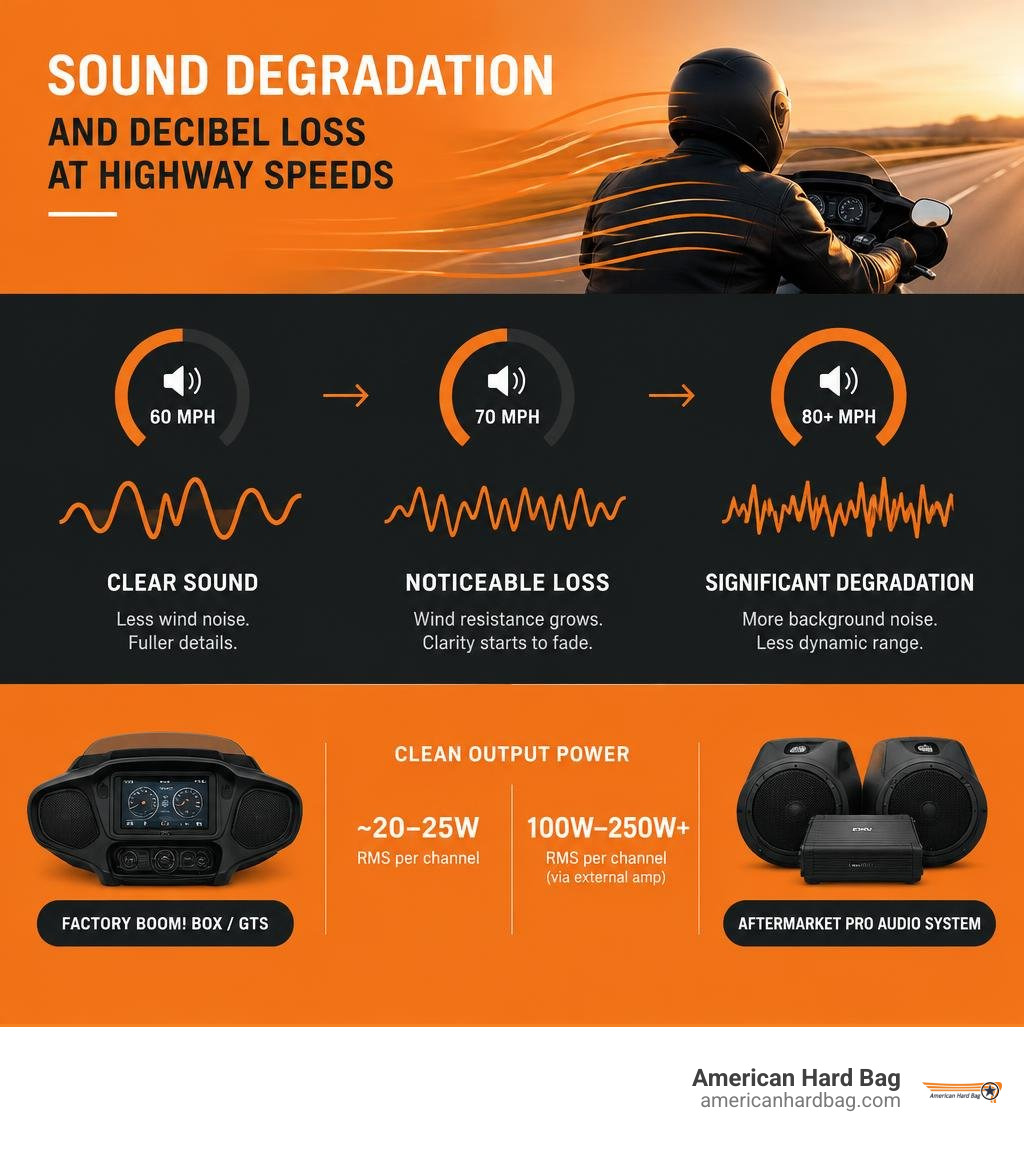
To compensate for high-speed wind resistance, riders crank the stock volume knob to its upper limit. That is when harmonic distortion sets in. The factory amplifier runs out of headroom, producing clipped audio signals that make your favorite tracks sound harsh, tinny, and muddy. Upgrading to a dedicated Harley radio replacement or an amplified setup changes everything by providing clean wattage and rich dynamic range.
| Feature | Factory Boom! Box / GTS | Aftermarket Pro Audio System |
|---|---|---|
| Clean Output Power | ~20–25W RMS per channel | 100W–250W+ RMS per channel (via external amp) |
| Preamp Outputs (RCA) | None (Requires line-level adapters) | High-voltage front, rear, and sub preouts |
| Equalization Control | Basic Bass/Treble sliders | Multi-band parametric EQ or DSP integration |
| Smartphone Integration | Basic / Wired CarPlay (model dependent) | Wireless Apple CarPlay & Android Auto |
| Speaker Expandability | Limited by factory impedance | Modular (Fairings, Lowers, Saddlebag Lids) |
| Sound Output Gain | Factory baseline | Up to 50% increase in clean acoustic output |
Evaluating Factory Boom Box Limitations
The biggest hurdle with factory infotainment is built-in Digital Signal Processing (DSP) equalization curves. Harley designs stock head units with aggressive bass roll-off curves to prevent cheap factory speaker cones from blowing out at elevated volumes.
As you turn the volume up, the factory stereo automatically pulls the low-end frequencies out of the mix while boosting harsh mid-treble frequencies. The result is an ear-fatiguing sound profile. Furthermore, attempting to add high-performance aftermarket speakers directly to a stock Boom! Box without an external amplifier often leads to severe amplifier clipping, a limitation that becomes clear once you understand how OEM electronics are engineered.
Key Benefits of an Aftermarket Harley Stereo Upgrade
Upgrading to a purpose-built aftermarket head unit fundamentally transforms your cockpit. Modern digital media receivers feature high-voltage preamp outputs, ultra-bright anti-glare touchscreens engineered for direct sunlight, and native smartphone mirroring.
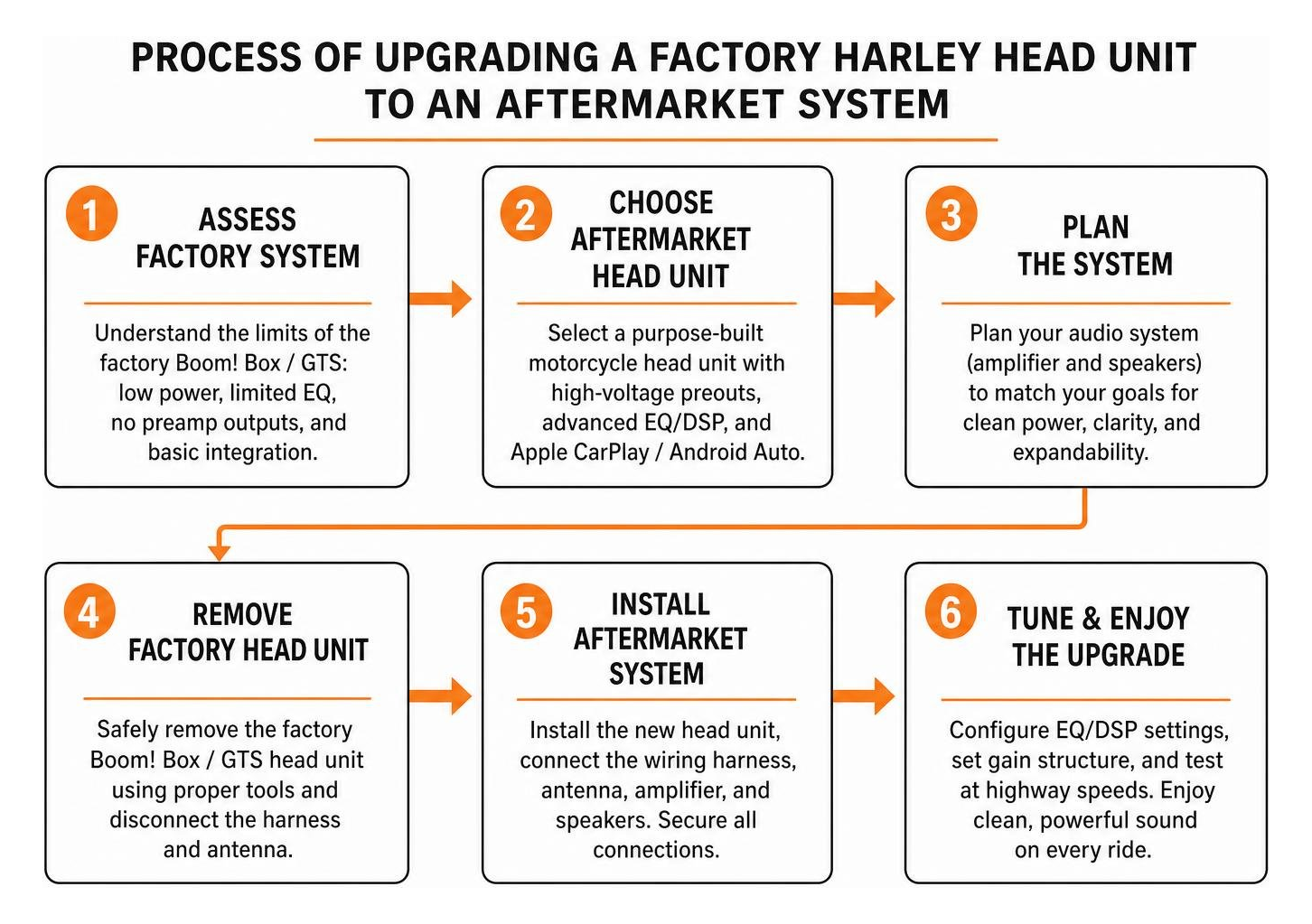
A prime example is the Soundstream Reserve PPI Radio V2 for 2014-2023 Harley Touring Baggers, which drops directly into the factory fairing opening while integrating smoothly with existing factory hardware. If you are looking to revamp your dash, browsing our Harley radios collection will help you pinpoint decks that pair modern convenience with rock-solid road durability.
Essential Features for Motorcycle Audio Systems
Motorcycles live in brutal operational environments. Unlike car stereos tucked inside sealed cabins, your bike's audio gear contends with pouring rain, desert heat, rough roads, and UV rays.
When selecting audio components, prioritize riders' real-world needs:
- Marine-Grade Ingress Protection: Look for an IPX6 or higher water-resistance rating on the faceplate.
- UV Resistance: Chemically treated faceplates and speaker grilles prevent fading and plastic embrittlement.
- Vibration Dampening: Internal circuit boards should feature conformal coating and reinforced solder points to survive engine vibration.
- Wireless Freedom: High-bandwidth Harley Bluetooth stereo connectivity lets you stream high-res audio seamlessly.
- Turn-by-Turn Guidance: Modern Harley radio navigation upgrade options keep maps visible on screen without requiring handlebar phone mounts.
Weatherproofing and Road Durability
True motorcycle-grade electronics use silicone gaskets around faceplate seams, sealed USB pigtails, and conformal-coated internal circuit boards. Conformal coating creates an impenetrable barrier against moisture ingress, road grime, and salt air.
Thermal dissipation is equally critical. Premium compact motorcycle amplifiers rely on extruded aluminum heatsinks to shed heat inside tightly packed fairings during long summer rides.
Rider Safety and Handlebar Controls
Taking your hands off the grips to adjust track selection or volume is dangerous at any speed; review NHTSA motorcycle safety guidance before making control changes. Retaining full functionality of your factory thumb controls via integrated CAN-bus interface modules is essential.
Modern control harnesses let you change tracks, toggle screens, activate voice commands (Siri or Google Assistant), and adjust volume without taking your hands off the bars or your eyes off the road, matching the expectations of riders across the touring community.
Upgrading Audio Across Different Harley-Davidson Models
Different frame layouts and fairing profiles dictate your audio roadmap.
The Street Glide and Electra Glide sport fork-mounted Batwing fairings. Space behind a Batwing dash is compact, requiring slim amplifier mounting plates and shallow-depth speakers. In contrast, the Road Glide's frame-mounted Sharknose fairing offers more interior volume, allowing for larger speaker magnets and multi-amp bracket systems. Explore targeted Harley fairing audio upgrade paths to match your specific fairing geometry.
Touring Baggers vs. Cruiser Audio Setups
Touring baggers provide the ultimate canvas for multi-speaker setups. Riders can easily expand from standard front fairing speakers to:
- Vented Lower Fairing Pods: Directs rich mid-bass directly at your lower body.
- Saddlebag Lid Speakers: Houses 6x9-inch drivers pointing up toward the rider, filling the open-air cockpit with full-range sound.
- Tour-Pak Rear Pods: Provides rich surround sound for you and your passenger.
If you ride a windshield-only bike or a cruiser like a Softail, you are not left out. Installing a high-output stereo for Road King setup using amplified handlebar bullet pods or custom quick-detach fairing systems gives you loud, clean sound without sacrificing classic cruiser lines.
Optimizing Your Harley Stereo for Highway Speeds
According to a survey by the Harley Owners Group (HOG), roughly 70% of riders who upgrade their audio report significantly higher overall riding satisfaction. The secret to highway clarity comes down to efficiency and power.

High-efficiency, low-distortion neodymium speakers paired with bridgeable Class D amplifiers deliver clean headroom. While top-tier factory configurations—such as CVO models boasting four speakers and a 500-watt amp—offer decent power, aftermarket pro-audio drivers outperform stock paper cones by projecting sound waves forward through turbulent highway air. Follow The Ultimate Guide to Upgrading Your Harley Davidson's Audio System to dial in crossover points, gain staging, and acoustic balance.
Installation Best Practices and Maintenance
Upgrading your bike’s audio does not mean hacking into factory wire looms. High-grade American Hard Bag systems use pre-loomed, color-coded, plug-and-play wiring harnesses designed to mate directly with OEM Harley connectors.
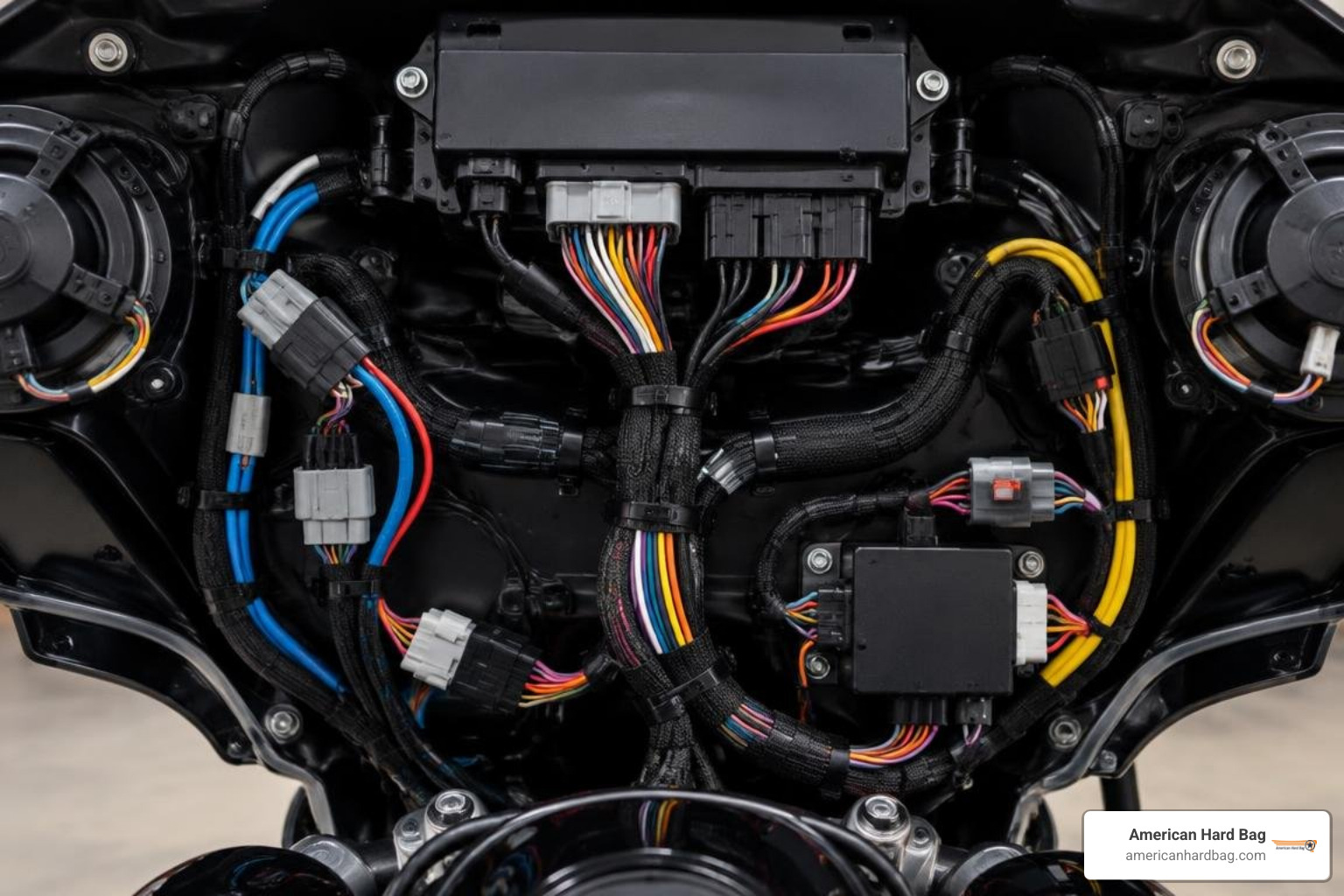
Keep these electrical and physical maintenance practices in mind:
- Manage Stator Load: Modern Class D amplifiers draw minimal current relative to output. Even multi-amp setups operate safely within the 45-to-50-amp stator limits of modern Harley touring bikes.
- Battery Health: Always run 4-gauge or 8-gauge oxygen-free copper (OFC) power cables directly to battery terminals with in-line water-resistant fuses.
- Anti-Corrosion Gel: Coat ground and battery connections with dielectric grease to prevent oxidation.
- Seasonal Audio Checks: Before every riding season, inspect internal fairing fasteners, ensure speaker grilles are clear of debris, and confirm all weather seals remain supple.
Frequently Asked Questions About Harley Audio
How do I stop highway wind noise from drowning out my music?
To cut through highway noise at 75+ mph, focus on high-sensitivity speakers (92dB+ sensitivity rating) driven by an external amplifier producing at least 100W RMS per channel. Upgrading to a slightly taller or recurve windshield also dramatically cuts turbulent cockpit air, allowing sound waves to travel smoothly from the dash to your helmet.
Can I retain handlebar thumb controls with an aftermarket deck?
Yes. Modern head units and installation kits use integrated CAN-bus interface modules that translate Harley's digital handlebar switch commands directly into the new receiver. You keep full control over volume, track skipping, input modes, and voice assistant activation.
Do high-power motorcycle audio systems drain the bike battery?
When installed correctly using ignition-switched turn-on leads, your audio system only draws power while the bike is running or in accessory mode. Efficient Class D amplifiers convert over 85% of input power into raw sound rather than waste heat, meaning your factory charging system can easily sustain high-output sound on cross-country road trips.
Conclusion
A world-class sound system turns every long haul, winding mountain pass, and daily cruise into an unforgettable ride. At American Hard Bag, we design American-engineered, road-tested audio systems that deliver uncompromising volume, crystal-clear vocal fidelity, and long-lasting durability.
Ready to leave weak, distorted factory audio behind? Explore our all-in-one plug-and-play audio packages and build the ultimate soundtrack for your ride.